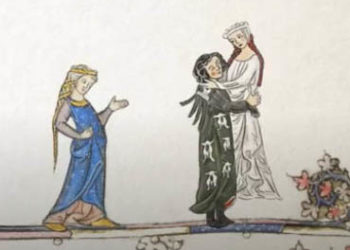
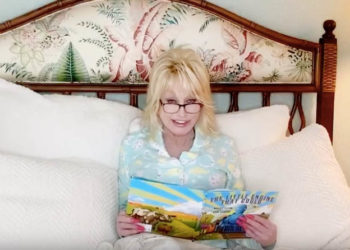
There are few, if any, humans on earth as universally beloved as was Dolly Parton, singer, songwriter, storyteller, author, philanthropist, businesswoman, and champion of literacy and science. Dolly has featured many times over the years in The Scholarly Kitchen, including this 2018 piece on her Imagination Library program distributing its 100 millionth book and this medieval style cover of “Jolene”. Dolly has been a hero to so many of us in the Kitchen for so many reasons, so we reached out to the Chefs to share their thoughts on her passing.
David Crotty
I have long been a Dolly stan — for the last (at least) 25 years my holiday tree has always been topped by a Dolly Parton ornament, as I would explain that you’re supposed to have a star at the top of your tree, and there ain’t no bigger star than Dolly. Her music is in constant rotation in my house, whether “Muleskinner Blues”, “Coat of Many Colors“, or more recently, her cover of the Beatles’ “Help!“. Dolly remains an important role model for our society, as someone who accumulated wealth for the purpose of using it to help others and better people’s lives, rather than as just a means of accumulating more wealth. Other people below will touch on her philanthropy and contributions to science (she was the inspiration for the name of Dolly the Sheep), but I want to touch on perhaps a less-recognized aspect to Dolly’s brilliance, that of her business acumen. As Josh Marshall wrote, Dolly was a pioneer, breaking ground both for women in business as well as for musicians. Dolly was a champion and a master of managing intellectual property rights and started her own publishing company at the age of 20, at a time where it was unheard of for a country singer, let alone a female country singer, to do so. This not only contributed to her earnings, but also gave Dolly control over her work and how it was used. Dolly famously refused to let Elvis record “I Will Always Love You” in the 1970s because his manager demanded she turn over half of the song’s publishing rights. Whitney Houston’s version of the song went on to earn Dolly more than $10M in the 1990s alone. And that $10M went on to do a lot of good for a lot of people.
But when I think of Dolly, I think of her joy and her sense of humor. Whether through the wordplay of a song like “I’ll Oilwells Love You” or through the joke-telling in the video below (and I strongly urge you to stick with it to see her number 1 pet peeve), there will never be another like Dolly.
Lisa Janicke Hinchliffe
As a librarian, I have to ask … did you know Dolly Parton is an Honorary Member of the American Library Association? Dolly Parton’s Imagination Library has provided more than 330 million books to more than 3 million children in five countries. I imagine there are many a librarian, publisher, and scholar whose first book collection included some of these gifted titles. “You keep reading!” #micdrop
P.S. In lieu of flowers, the family asks that donations be made to Dolly Parton’s Imagination Library.
Lettie Conrad
A creative force of nature, Dolly Parton has been a hero of mine for ages. Her first big hit, “Dumb Blonde,” was a stealthy entry point into a long career that challenged stereotypes and biases in the most disarming and entertaining way. On the surface, she projected a hyperfeminized, drag-like persona, but Dolly’s craft came from a deep well of talent, grit, and inspiration. Not to mention her role in bringing the Moderna COVID-19 vaccine to market so quickly during the pandemic!
Personally, the movie “9 to 5” and its theme song were formative for me as a child, in particular preparing me for the hurdles professional women are up against every day -— with a catchy tune to hum while living through moments of feeling like “a step on the bossman’s ladder.” I’ll end by sharing a famous Dolly joke below, only appropriate for a Friday and a great example of her range and comedic timing. Thank you, Dolly, for reminding us to find the good in everybody. I will indeed always love you!
Angela Cochran
If you got the Moderna COVID vaccine, you owe Dolly Parton a thank you. Among her many other public and private philanthropic endeavors, Parton pledged $1 million to help fund vaccine development as early as April 2020. Vanderbilt University Medical Center, where Parton died earlier this week following a cancer diagnosis, was participating in the research and clinical trials for Moderna’s vaccine. A researcher she was friends with indicated that they were making great progress on a vaccine and she jumped in to speed things along.
She also became a public advocate for getting the vaccine. Her own immunizations were done publicly, and she talked about the importance of trusting the science and even created a jingle singing “vaccine, vaccine, vaccine, vaccine…” to the tune of her epic song “Jolene” and telling viewers “don’t be a chicken squat, go out and get the shot.”
This was not the only scientific backing from Parton. She donated another $1 million to Vanderbilt in 2022 for pediatric infectious disease research. She also funded the Dolly Parton Center for Women’s Services in East Tennessee, where she grew up. And the children’s hospital in Knoxville was renamed after her.
I imagine that her conversation with the researcher friend at Vanderbilt was easy. She heard him talk about the promises of the research, and she probably asked how she could help. The answer is always money. In the face of cuts to federal research in the US, analysis has been done to show that philanthropy can not make up the gap. Still, when an opportunity presented itself to support the science, Dolly Parton showed up.
Dianndra Roberts
Dolly Parton was beloved around the world, the true definition of an icon. Across the West Indies, there is a deep-rooted love of country music; many of us growing up in the diaspora were immersed in the music and artistry from birth. Dolly Parton is a household name, an institution. From the beginning, I found her fascinating — a commanding presence with a love of pink, long sparkly nails, and a good lip combo (as I write this, I realize she may have been a bigger influence on me than I first thought). Although she did not claim the title of a feminist icon, she was absolutely an icon for women, especially in male-dominated fields; a trailblazer with her accolades and entrepreneurship. Not to forget, her openness about her experiences with infertility and endometriosis was ahead of its time — conditions which are still misunderstood and stigmatized in 2026.
Dolly Parton started the Imagination Library in 1995, set out to encourage child literacy in underfunded communities. Starting in East Tennessee and is now available across the United States, Canada, Australia, United Kingdom, and Republic of Ireland. Children are able to receive a book from birth until the age of five years old, addressed to them, accompanied by letters from Dolly, nicely packaged and at no cost to the families. This initiative has changed lives and changed the landscape of early childhood literacy across the globe, giving families a positive experience of reading and access to diverse literature. As members of the scholarly publishing community, we know the importance of literacy and critical thinking. New research shows children in the US program were “11x more likely to be interested in books” compared to those not in the program. And in the UK, “children were 9x more likely to demonstrate phonological awareness than those not in the programme”. As a child who found great comfort in books and a regular library user, this programme would have benefited me. However, I love to see the positive impact it is having on children in the community I grew up in and celebrating children’s authors I admire.
Dolly Parton has undoubtedly changed the world with the Dollywood Foundation through social initiatives, research funding, use of her royalties (“The house that Whitney built”) and ultimately through her kindness. She did everything with heart and humanity, showing her support for others along the way, be it newer artists, her recurring guest role on Hannah Montana (shaping the morals of many millennials), and sending notes of encouragement to industry peers — the true lived definition of an ally. Seeing the messages and shared stories from her musical peers, from Reba to Eminem to Pitbull to Beyoncé, gives us just a glimpse of how far she poured her heart.
I will end with a quote from Ms Parton that has impacted me as I believe we can absolutely make change through our sphere of influence. With her passing, I think now is a great time, especially in this current climate, to reflect on what that means for who you are and where you are at. “We can’t save the world, but we can save the world we’re living in.” Rest in eternal peace Dolly P.
Roy Kaufman
While in some ways I feel neglectful if I do not write extensively about Dolly Parton’s contributions to intellectual property, artists’ rights, child literacy, or science — but, first and foremost, when I think of Dolly Parton, I remember the 14-year-old boy who went to the movie theater to watch “9 to 5.” My mother, Elaine, was a teacher and a lifelong, unapologetic feminist. While she didn’t say it at the time, she no doubt viewed the film as a teaching moment. I, of course, loved the film. While it did not solve all of the issues it raised (that would be a bit much to ask of a Hollywood movie), it raised many of the critical issues of the Me Too movement three decades before the movement started. Dolly Parton’s support for causes such as copyright, child literacy, science, gay rights, and women’s empowerment are all just facets of her support for humanity.
The internet is awash today with great Dolly quotes. Here is my favorite:
“Lord, I’ve got enough problems of my own to pass judgment on somebody else.”
Alice Meadows
I think we can all agree that Dolly Parton was one of the all-time greats — so much more than “just” a highly successful and popular musician. She was a supporter — through her words and her actions — of literacy, the LGBTQ community, healthcare (including vaccines), #BlackLivesMatter, to name just a few. When thinking about what to write for this post it occurred to me that Dolly also embodied SSP’s own core values.
Community was always important to Dolly, from her earliest days growing up in poverty in rural Tennessee — she gave back to that community her whole life (e.g., helping fund the local hospital, creating jobs at Dollywood). And she also supported the wider community in so many ways, including through her wonderful Imagination Library and her funding of the first Moderna Covid vaccine.
Dolly was nothing if not committed to inclusivity of every sort — she was an early advocate for gay marriage and stood up for trans rights; she supported #BlackLivesMatter; she was a deeply religious Christian who respected all faiths; and she deliberately stayed out of politics because her fan base ran the spectrum from MAGA Republicans to democratic socialists.
Dolly’s adaptability was the stuff of legend. Hers was a true rags to riches story and her career achievements included crossing the country music/mainstream divide, starring in successful movies, being a generous philanthropist, and so much more.
Above all, Dolly had integrity — lots of it. She always stayed true to herself, even when she was mocked for the way she looked, her beliefs, or her abilities. That’s why she was so universally loved. In her own words, “I know who I am; I know what I can and can’t do: I know what I will and won’t do. I know what I’m capable of and don’t agree to do things I don’t think I can pull off.”
Words for us all to live by. RIP Dolly.


Discussion
4 Thoughts on "Goodbye Dolly"

Thank you for your wonderfully moving tributes to Dolly Parton.

Love all of these thoughts on Dolly. Thank you all for sharing. It’s been a rough week, for sure.

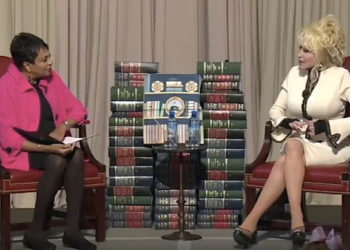
Does anyone else remember Dolly’s speech at the American Association of Publishers meeting in March 2000? She sang the chorus of “Coat of Many Colors.” There were people in the audience fighting back tears after just a few bars. (The C-SPAN video is available online.)

For fans of Dolly, John Mayer, and The Stephan Talkhouse bar, here’s a clip of Mayer’s tribute.