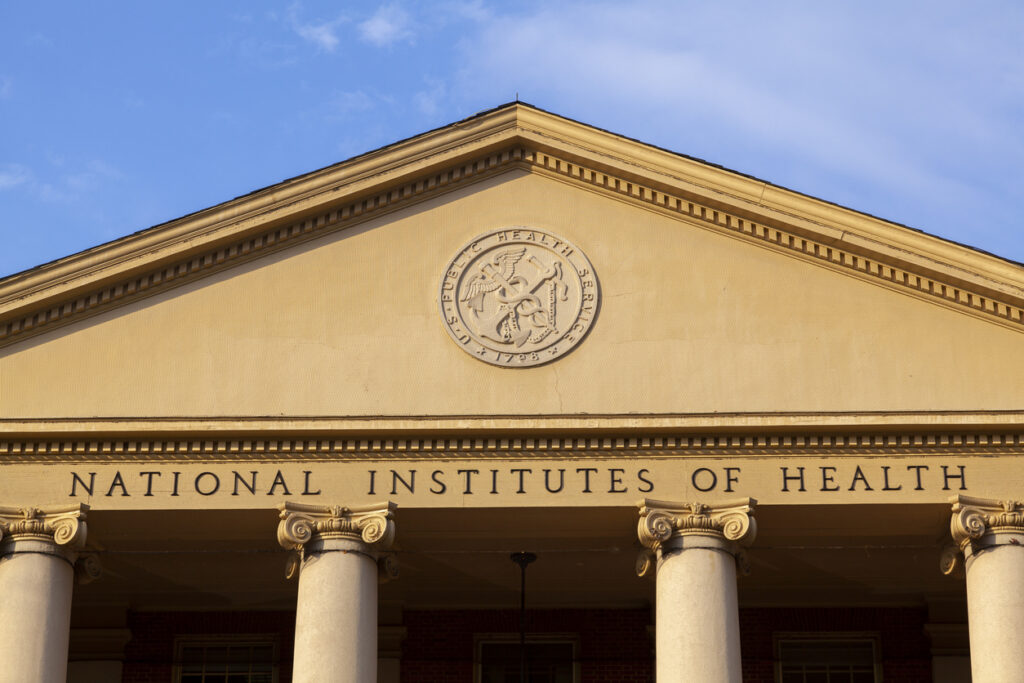
More than 400,000 US federal employees have left their jobs during the second Trump administration – voluntarily or, in many cases, not. Even taking into account new hires since January 2025, there has been a net loss of 285,000 staff, many of whom had years, if not decades, of experience. Over 10,000 of them were experts in STEM and health fields, with the National Institutes of Health (NIH) especially hard hit, losing more than 1,100 staff – around 10% of its workforce. Among them were Sylvia Chou and Alexa Romberg, who chose to leave the organization as a result of the changes being made under NIH Director Dr Jay Bhattacharya. They were two of the original signatories of the Bethesda Declaration, an open letter to Dr Bhattacharya that expressed serious concerns about the changes being made under his leadership. Sylvia and Alexa are both involved in 27 UNIHTED (Sylvia as a Senior Advisor), an organization that was set up in 2025 as a way to continue supporting the integrity of publicly-funded health research in the United States.
I met Sylvia and Alexa through my work on censorship as part of the #DefendResearch team, and they kindly agreed to talk to me about their experiences, their concerns, and their hopes for the future of US federally-funded research.
Please can you tell us a bit about yourselves – your work at NIH, why you left, and what you’re doing now?
Sylvia: I was originally trained in Linguistics (PhD in Sociolinguistics), before moving into public health (Master of Public Health) during my postdoctoral fellowship program at the National Cancer Institute, NIH. I then spent nearly 16 years as an NIH program official overseeing a research funding portfolio on public health/cancer prevention and control research, with a focus on health communication. My own research topics included social media, patient-provider interactions, health literacy, misinformation, intersection of technology, media, and health behaviors. I published extensively on these areas in collaboration with my colleagues.
The NCI was imperfect, but I had a fulfilling career -– until 2025, when political control took over nearly all aspects of the work. After blowing the whistle with the Bethesda Declaration and trying to protect as much of the science as possible, I resigned from my position in January 2026 because I felt that the integrity of science had been compromised; censorship and ideological control had become normalized. The idea that “you can get another job, but you cannot get another soul” really resonated –- in fact, each of us in the Bethesda Declaration community have a mug with this quote!
Since leaving the federal government, I have been busier than ever: organizing to uphold academic freedom and oppose censorship of science, writing a book about our Bethesda Declaration movement, and helping to conceptualize a future governance structure for academic research. In September, I will be a Shorenstein Center Fellow at Harvard Kennedy School, continuing to write and speak about all of these issues.
Alexa: I was Deputy Chief in the Prevention Research Branch at the National Institute on Drug Abuse (NIDA) until I resigned in December 2025 in protest of the administration’s attacks on science and the NIH. My role as a Program Officer was to help applicants navigate the NIH and to help the NIH identify scientific priorities in my areas of expertise. It was devastating to have to leave NIH, as this was truly my dream job. I was trained as an experimental psychologist with a focus on cognition and development and then I shifted to work in tobacco control about 10 years ago. In 2020, I joined NIDA to manage a portfolio that brought together my diverse interests – experimental design in tobacco and cannabis regulatory science, social media approaches to prevention, reducing health disparities, and translating between basic and applied behavioral science. It was exciting to talk to so many different kinds of scientists, hear their ideas, and think about how to make the research impactful – not just within the scientific literature, but within communities. At the end of 2024 it felt like so many amazing things that we had laid the groundwork for over my first years at NIDA were really coming together. But during 2025, all of the parts of the job that were interesting and exciting were essentially taken away. Instead, we were charged with censoring research. To me, that was unacceptable. It seemed like a violation of the researcher’s First Amendment rights and was definitely not scientific and not ethical. It just wasn’t something I could continue to participate in.
Since leaving NIH, I’ve been on a journey, restoring my mental health and figuring out how to continue to contribute to the advancement of science outside of the NIH. The community of Bethesda Declaration signers has been such a support and inspiration and I continue to work with them, and 27 UNIHTED to speak out. I’ve just launched a consulting business, Resonance Research Consulting, to support research design and impact. And, I’m working with Sylvia and another former NIDA Program Officer, Vani Pariyadath, to launch Mosaic Research Frameworks, a think tank dedicated to envisioning the future of science and building infrastructure that advances equity and scientific integrity.
How did you get involved with 27 UNIHTED and Mosaic Research Frameworks? What are you hoping to achieve with these organizations? Can you share some examples of their work?
Sylvia: I met and worked closely with organizers of the Bethesda Declaration in spring 2025, and our dissent letter, published on June 9 that year, became a catalyzing project that brought together people across the NIH, the wider civil service, and academia to continue to speak up against the administration’s harmful policies. 27UNIHTED was born from that period, when many of our fellow civil servants were fired and it seemed like nobody in the leadership was going to come and save us and the important health research we championed. Organizing with Bethesda Declaration signers and 27 UNIHTED has been a tremendous learning and growing experience, and our solidarity and mutual support have provided the skills and courage needed to think about our future. Together with Alexa and Vani, I am also envisioning the future of academic research infrastructure through our new think tank, the Mosaic Research Frameworks, focused on rebuilding in a way that protects academia from the political whims and enacting a research system that is more ready than ever to serve the needs of diverse communities.
Alexa: As Sylvia says, joining with the Bethesda Declaration signers was a huge support and 27 UNIHTED has done so much work over the past 18 months to take what we’ve been experiencing to the public and providing tools for the public to act — for example with the lapse in SBIR funding and the proposed OMB rule to fully politicize federal grantmaking.
Sylvia, Vani, and I, with support and input from other NIHers, started working together last fall to conceptualize how we could use our expertise — as scientists, as program developers within the NIH, as individuals pushing back against the authoritarian capture of our infrastructure — to envision what comes next. We formed Mosaic Research Frameworks to advance the reconstruction of our government-funded scientific systems. We are rethinking assumptions and structures to build a future in which health equity, community partnership, transparent rigor, and scientific independence are fundamental to the way we fund and support research.
I know that the U.S. government’s efforts to censor information is of great concern to you – and to 27UNIHTED. How would you define censorship as you’ve experienced it under this administration?
Alexa: A large part of the censorship is about eliminating discussion of aspects of our society that the administration doesn’t want to acknowledge. The administration is labeling terms like “health equity”, “structural racism”, “underserved”, “social determinants of health” as unscientific and requiring they be removed from grants before they can be funded. What these terms have in common is that they pull together several discreet phenomena about our lived experience to describe how they contribute to health. They help explain why our country has such persistent disparities in health outcomes across different subpopulations.
So, hypothetically, you might be able to get a study funded looking at one aspect of social and structural factors related to health. But you can’t try to put the pieces together into a larger theory, which is textbook censorship. In his first town hall as NIH Director in April 2025, Dr. Bhattacharya told NIH staff that studying redlining was acceptable, but referring to redlining as an aspect of structural racism was not. In reality, projects studying health impacts of redlining were terminated also, because what is and isn’t permissible is fully at the whims of political administrators, rather than scientific staff.
Sylvia: I would add that by now, under this administration, most researchers have come to expect censorship as an unavoidable part of their scholarship pursuits. This normalization also means that censorship is insidious, multi-faceted, ubiquitous, and yet often invisible. Program Officer A may advise Professor B to take a concept out “just to be safe” even though they have not been told that the concept is banned or even disapproved. Professor C may opt to work on a different topic less likely to face censorship, abandoning their academic trajectory to bank on a safer passage through NIH political review. The political leadership does not need to explicitly ban or censor a topic. People’s anticipatory compliance – out of fear or wish for survival – has already significantly compromised our academic freedom.
How is censorship actually happening at NIH, what does the process look like and what impact does it have, both within the agency and outside?
Alexa: The details have changed somewhat over time, but the overall process is still the same. When a grant has been approved by an Institute and is ready to be released for funding, it goes to a central NIH office. That used to be a formality, and the office would just release the notice of award. But now the NIH Office of Extramural Research and its director, Jon Lorsch are screening every grant for words or phrases the administration finds objectionable. Grants that pass the screening are sent to HHS for another round of review.Grants that fail any screenings are sent back to the Program Officer with a note about what needs to be removed in order for the grant to be funded. The Program Official then is responsible for telling the investigator what to change. Some changes are relatively easy to make without impacting the core scientific questions. For example, when “equity” is being used in a research grant, it is generally referring to bigger picture context and goals, not the specifics of the approach. However, when, for example, “racism” is changed to “interpersonal stress,” the underlying research scope is fundamentally altered.
There is so much wrong with this. First, many NIH staff are repeatedly required to act against their values to change grants in ways they know are making them weaker, not stronger, causing a terrible drain on their mental health. At the same time, the NIH Director Jayanta Bhattacharya continues to insist in public forums that there are no banned words at NIH. This dissonance between public statements by leadership and the lived reality of NIH staff and researchers is deeply harmful. Second, a grant using the word “racism” that went through peer review and received a strong enough impact score to be considered for funding may not have been rated as rigorous or significant if it was about “interpersonal stress”. Third, as Sylvia notes, applicants and grantees are self-censoring, trying to keep their projects under the radar of the administration. And because what is and isn’t allowed is constantly changing, they are experiencing deep uncertainty about whether their research is fundable at all.
Sylvia: Yes, and throughout all of this, the top-town directives are opaque and constantly shifting, leaving everyone involved with a lot of guesswork. Consequently, the morale of NIH-funded scientists is at an all-time low.
Can you share some examples of censorship you’ve witnessed and that you see as being particularly alarming?
Sylvia: Before I left the NCI, I saw my portfolio going through heavy censorship. Topics such as HPV vaccine for cancer prevention (because it touched upon vaccination), the health of minority populations (immigrants, Latino or African Americans, LGBTQI communities), and health misinformation, were all deemed “not aligned” even when the research projects were deemed funding worthy. It’s increasingly hard to locate research projects that may be deemed “sensitive” to ideological directions of the administration – the NCI website featuring the 20-30 active research grants in my portfolio when I left has gone through various iterations with many “controversial” (engineered controversies) now hidden.
Alexa: A big one for me was the termination of the NIDA Racial Equity Initiative. Through a series of funding opportunities spanning multiple years, we had over 15 active projects, with the final cohort of applications set to be funded in 2025. This initiative got the full censorship treatment. The funding opportunity notices were taken off the website as though they had never been published. The applications that were supposed to be reviewed in the spring of 2025 were withdrawn by NIH. The active grants were terminated (some have since been reinstated through various opaque processes). All this despite the fact that, other than using the word “equity,” the initiative was in alignment with the supposed priorities of the NIH as stated in the August 15, 2025 Unified Funding Strategy Director’s Statement. Those priorities called for “solutions-oriented health disparities research” and explicitly deprioritized projects that only documented disparities without seeking to reduce them – exactly what the NIDA Racial Equity Initiative required. It really shows that the termination and censorship process isn’t actually about “alignment” or making scientific judgments.
And we see this continue, with the termination in July this year of an NIH grant studying the effects of experiences with discrimination on health in Black Americans. As reported in the press, the reason given was that the measure of discrimination was a self-report measure that “is subjective and problematic because different people could interpret the same experience differently.” However, self-report measures are frequently used in understanding health – they are critical for understanding things like stress, anxiety, depression, and many other topics. There are long-standing practices to ensure their validity. Indeed, peer reviewers typically are very critical of the specific measures used in a study and want to make sure they are valid. So the fact that NIH is now overriding peer review and the judgment of career staff involved in funding this award originally suggests that they are basing their decisions on the topic being studied rather than on scientific considerations.
What about the downstream effects of this sort of censorship? Have you seen any evidence of publishers being impacted – or reacting – in any way?
Sylvia: I have seen evidence already and I imagine we will only see more in the near future. The impact on overall scholarship is grave. Words are ideas, and ideas are the future, so many fields and inquiries are already being changed. Equally concerning is the impact on the governance process of academic research: these illegal/unethical practices are currently seen as the norm. Like it or not, scientific integrity is already compromised across the board, even if censorship only touches on select areas. The cultural impact on the research workforce is what’s most concerning to me. When we allow censorship, we show researchers that they cannot expect academic freedom and we tell them that (in this case) the government is ultimately in charge of ideas and speech. This further erodes people’s trust in science, higher education, and the entire enterprise of knowledge generation.
Alexa: I think the downstream effects are likely going to be felt in the next year, as researchers whose work has been censored start publishing their findings. One of the questions I was asked repeatedly as a Program Officer in 2025 was whether an awardee had to take term X out of their grant, and could they still use term X when publishing the results. Before 2025, NIH would not have investigated publications in that way. Now, I think it is unclear. This notice published in November 2025, essentially states that “if NIH discovers that recipients have not complied with the new terms and conditions of their award, NIH can immediately take an enforcement action under 2 CFR 200, as appropriate, which includes termination for non-compliance under 2 CFR 200.340(a)(1).” What that actually means is anyone’s guess right now.
What would you like to see the Scholarly Kitchen community do to fight back against U.S. government censorship? What can librarians, publishers, funders, researchers, and others do to support your work?
Sylvia: I think it’s important for journal editors, administrators, and authors to recognize that even if they themselves (e.g., at Journal X, Library Y, or University Z) “don’t censor” contents of research, the reality is that censorship has already impacted our academic pursuits as a whole. It is important to stay alert to any changes and threats and assert your freedom of speech whenever possible. Relatedly, well beyond scholarly efforts, we are in a broader ecosystem currently affected by political control and state-implemented censorship. We must all acknowledge the reality and devise ways to push back – through litigations, legislative solutions, and general awareness raising in all different communities including higher education, vulnerable communities, and the various media silos. Let’s have more conversations across our communities and learn to really listen to one another. Building meaningful relationships and strengthening our community will help us be more effective in pushing back and in living our our fundamental values.
Alexa: I agree with Sylvia. It is vital that everyone in the information ecosystem deeply considers their actions and responsibilities right now, for example, by examining their organization’s policies and communications to ensure they are staying true to mission and maintaining their integrity. Like Sylvia, I would also emphasize working together. There is strength in numbers, partly because it makes one less vulnerable to attack but, perhaps even more importantly, working as a community allows you to build the courage and practical approaches to shore up vital processes and infrastructure. Finally, I think information safeguarding and redundancy are urgently needed as the US systems are under attack. Projects like Data Rescue Project and OLS Pub are important to maintain our current and future knowledge base. Investments in these types of projects not only help in the current moment, but will also contribute to greater democratization and accessibility of knowledge for the future.