Editors’ note: Today’s post is by Richard di Santo, Vice President of Operations at JMIR Publications. Reviewer credit to Chef Stephanie Lovegrove Hansen.
In 1932, in the depths of the Great Depression, Bertrand Russell looked at the machinery of the modern economy and saw a choice being made. “Modern methods of production have given us the possibility of ease and security for all,” he wrote; “we have chosen instead to have overwork for some and starvation for others.”
The line is almost a century old, yet it has lost none of its accusatory relevance. Russell’s point was not that we couldn’t distribute the gains of productivity fairly, but that we possessed the means and declined to use them. Every era since has brought its own machine to apply his test to, and has, by and large, failed it. Now it’s our turn, and the machine is artificial intelligence.
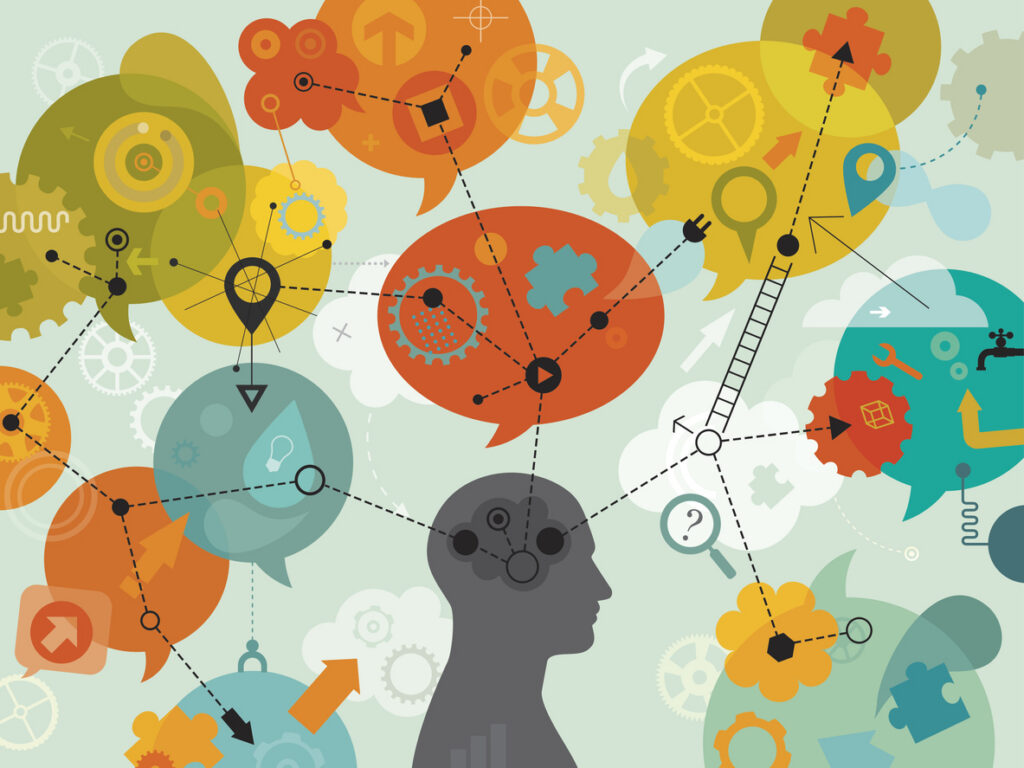
If we want scholarly publishing to be worth anything in a generation, we have to be clear about both what AI offers and what it puts at risk. I want to focus on two risks. The more familiar is the Russellian one: that we spend AI’s productivity gains on more output rather than any shared benefit. The greater, less discussed risk is that automating judgment erodes the very thing our industry exists to protect: trust. Both are failures of the same kind — taking what automation gives us and using it badly. But this same moment is also a chance to get ahead of the danger and build something more resilient. Those who do will earn the trust everyone else is giving away.
The Seductive Vision
We all know the story: automation is liberation, so let the machines take the toil out of our work. In practice, that means the genuinely mechanical parts: formatting, reference validation, technical and integrity checks, metadata, much of copyediting — the necessary scaffolding around the assessment and publication of science. Hand all of that to the algorithms and we free people for the work that actually requires a human: editorial judgment, curation, a sense of the field and its people — the slow, unquantifiable business of deciding what’s worth publishing, and how, and why.
It’s a good story, and surely would have recognized the dream. “Ease for all” was never a vision of people lying inert on sofas; idleness was rather a precondition for the higher faculties — and for us, those faculties are what advance both the science and the business of curating it. The promise is concrete: more careful peer review, not less; more time for the editorial judgment an ever-tighter pipeline squeezes out. No story this appealing is quite so simple.
Russell’s “starvation for others” was literal in 1932; ours is quieter. Automation reaches the most routine work first, and its costs fall unevenly — fewer jobs, fewer ways into the profession — hardest of all on those already least secure. There are real human costs here, and pretending otherwise helps no one.
The serious objection is that this is how economies adapt — shrinking library budgets, the shifting economics of open access — so any talk of sharing the gains is naive. Some of that is fair: cost discipline is part of building a business that thrives. But that’s exactly the point. Genuine pressure makes it tempting to treat a bad outcome as inevitable, but behind every outcome, at some point, a choice was made.
Displacement is one side; the other reaches everyone still working: freed time vanishes as fast as it appears, because we feel compelled to fill it rather than reclaim it. None of this is peculiar to publishing — we take on more, run more in parallel, and let the boundary between work and life blur until focus itself becomes scarce. This is not just an economic arrangement but a moral attitude toward work — industriousness as virtue, idleness as sin. We automate the toil and keep the cult of busyness; the machines do more, but somehow so do we.
What Are We Really Automating?
Automating drudgery is a real gain, and a necessity. The volume of research has outpaced what manual processes can manage, and AI is how we handle the scaffolding around assessment quickly and accurately. Nowhere is the need more urgent than in research integrity, where fabrication now operates at industrial scale, and can only be met with screening at the same scale.
The trouble is that we aren’t stopping there. Across our industry, we’re also building AI systems to produce trust markers: automated signals of a paper’s integrity and quality. The promise isn’t to flag concerns for us, but to settle them — whether the science is sound, the image manipulated, the citation real. Increasingly, the investment is aimed at automating the assessment of science itself.
But if scale is the reason to embrace AI for the scaffolding, the same logic seems to apply to assessment: that same volume has outpaced our capacity to judge it, too, so why not let the machines judge? Automating the scaffolding faster has a floor under it: get the metadata wrong and you fix the metadata. Automating judgment to keep pace is different because what’s at stake is the one thing the volume was supposed to produce — science we can trust. The real risk is a hidden liability, one we walk into gradually, because every step feels like keeping up.
All the while, we reassure ourselves: the AI flags, the human decides, and trust still terminates in a person. I think that’s true today and will be false sooner than we expect, undone by the very tools we’re deploying to preserve it.
The Quiet Atrophy
When we no longer need to think critically to uphold high standards, we will no longer be able to think critically to uphold high standards.
Critical judgment is a skill that survives only as long as you exercise it. A reviewer who has assessed a thousand methods sections can smell a wrong one — that nose is the accumulation of a thousand acts of judgment. Let the machine do the first pass, then the second, then the only pass, and the capacity decays in the reviewers who have it, and it never forms in those who come next.
This is not only theoretical. Early empirical research is beginning to bear it out: a 2025 study by Microsoft and Carnegie Mellon researchers found that higher confidence in a generative AI tool was associated with less critical thinking applied to its output, and separate 2025 work by Michael Gerlich tied frequent AI use to lower critical-thinking scores, via cognitive offloading.
This pattern is known as the irony of automation: automate a skilled task and you don’t eliminate the human, you demote them to monitor. But the skill itself decays without use, so when the automation fails, as it eventually does, control returns to the person no longer equipped to handle it.
To defend human assessment is not to romanticize it. Peer review as it stands is overstretched, uneven, and fallible. But its flaws are at least visible — they can be argued with, appealed, and corrected, and that’s what makes the system improvable. Swapping it for a frictionless automated one doesn’t repair those flaws so much as bury them: the errors stop being visible and contestable, and become ones the system itself can’t detect. We would be trading errors we can see for a fragility we can’t.
The Hollow Signal
Consider the logic of the trust marker. We build AI to generate it; we trust the marker because a human validates the AI; but that capacity to validate decays the more the validation is offloaded. Step by step, validation becomes ritual rather than guarantee — a gesture, not a judgment.
That ritual touches the one asset our industry actually sells. A journal’s name is a trusted signal: it tells a reader that something was scrutinized by people competent to scrutinize it. Hollow out the competence and the signal doesn’t disappear — it becomes an empty label, a brand that might still command deference but no longer certifies anything. Trust persists as a performance long after it has stopped being a fact, and the most valuable thing we own stops meaning anything.
The old question returns with force: quis custodiet ipsos custodes? Who validates the validator? The watchman we’re counting on is being quietly unfitted for the watch.
The obvious rebuttal is that the machines will simply become good enough that human judgment is no longer required: who cares if the watchman sleeps, if the vault is secure? But trust in science was never only about producing the right answers. No one can verify it all; scientific knowledge rests on trusting the competence and honesty of the people who stand behind the work. It is the property of a community of judgment — people who can be held accountable for their assessments, who can recognize the genuinely novel or cleverly adversarial case that lies outside the existing corpus, who can revise their standards when the field moves beneath them, and who can justify their decisions publicly — the accountable, contestable legitimacy that gives scientific trust its meaning.
And the gatekeepers were never the only safeguard. A weak paper that clears review has always faced the scrutiny of everyone who later reads, weighs, and decides whether to cite it — a second line of defense now thinning under the same pressure, since the erosion of judgment reaches readers as surely as editors. The trusted name on the journal is only as good as the faculties of those who rely on it, and those faculties are eroding too.
The Choice Before Us
Russell offered a choice about what to do with the time and effort machines give back to us. His answer was that we should be freed for the higher work: for thought, for judgment, for the exercise of the faculties that make us worth automating for. The industry’s emerging answer is the precise inversion. We are using AI to be freed from thinking — outsourcing the judgment itself, hollowing out the capacity it depends on, and calling the result efficiency.
This is not fate. It is, in fact, an opportunity — but only if we choose deliberately.
When automation frees up time or money, what to do with them is a decision. The right call is sometimes disciplined cost-cutting, and sometimes reinvestment in the people and judgment the work depends on. What can’t be optional is the capability the whole business runs on: judgment sharp enough to be worth trusting. In every tool we build or buy, we must learn to tell the difference between automating the scaffolding around assessment and automating assessment itself, and treat the second as something to govern, not merely adopt.
Above all, we need to protect the conditions under which critical capacity is built and kept sharp: the apprenticeships, the hard cases, the useful friction we’re tempted to engineer away. Some of the roles automation reaches first are where judgment is formed — cut the bottom rungs and the ladder stops producing the people the top depends on.
Nor does any of this mean AI must be banished from the evaluative process. Instead, its role has to be designed — more as a sparring partner than a surrogate. A tool that hands the reviewer a verdict invites deference; a tool that hands them a question demands judgment. AI that flags contradictory literature, surfaces methodological gaps, or stress-tests a hypothesis gives the human something to investigate rather than accept. Everything turns on that distinction. In a related 2026 MIT study, the AI strategies that asked users questions built lasting skill, while those that handed over answers fostered dependency. It’s also the real answer to the volume problem: machines aiming, not replacing, human judgment — directing attention where it’s most needed, instead of spreading it thin or handing it over entirely. Watch how often our people overrule the machine. When they stop, that isn’t perfection — that’s deference. No one publisher can hold the line for the whole field — but it can hold its own.
There lies the advantage. As AI floods every field with plausible-looking work — some of it honest, some of it not — trustworthy judgment becomes scarce, and scarcity is where value concentrates. The publishers who keep their people sharp will be the ones whose name still means something when everyone else’s has thinned to a label.
A machine can tell you whether a paper resembles sound science. It cannot, in the end, trust it — that is a human act, a human responsibility. And the moment we lose the judgment it rests on is the moment we can no longer tell it’s gone. Russell’s machines gave us the possibility of ease and security for all. Ours offer something subtler and more seductive: the possibility of never having to think again. That is the one trade we can’t afford to make — and those of us with hands on the levers should be the first to refuse it. We have, after all, a hundred years of practice at making this choice badly. It would be a fine thing, for once, to make it well.
AI Disclosure: The author used AI for proofreading only, but no substantive edits or rewrites.