Editor’s note: Today’s post is by Hilary Craiglow. Hilary Craiglow leads library consulting at Attain Partners, a higher education consulting firm. With a deep commitment to libraries, she partners with universities to strengthen financial positioning, integrate data-informed assessments, and align library operations with institutional goals. She is responsible for modernizing a Library Cost Study, articulating the value of libraries in the research enterprise, and demonstrating library expenses for cost recovery for sponsored research.
Earlier this summer, I shared with Scholarly Kitchen readers the efforts underway by the Joint Associations Groups (JAG) to develop a response to the federally imposed reductions in indirect cost recovery as a component of grant budgets. JAG had developed two possible models. After extensive community feedback and analysis, JAG has finalized a refined model that includes Research Information Services (RIS) as an essential research infrastructure. In this post, I will present the JAG model and juxtapose it with two other models that Congress will consider for recognizing university support for federal grants and contracts. In doing so, my goal is to help libraries and publishers prepare plans for the different scenarios that could develop.
Three Potential Paths
The current moment presents three distinct approaches to federal research funding reform for consideration by Congress. Each has different implications for scholarly infrastructure and research information services.
- A Straight 15% Cap: The most draconian option under consideration would simply impose a uniform 15% indirect cost rate cap across all federal agencies and institutions. This approach, favored by current federal fiscal hawks, would slash current rates that typically range from 40% — 60% at major research universities. While politically appealing in its simplicity, this option treats all research infrastructure as equally dispensable overhead, making no distinction between administrative bloat and essential research support services. This option will devastate our universities. For libraries and scholarly publishers, this scenario represents an additional threat, burying information services even deeper into inadequate overhead allocations.
- Simplified Negotiated Rates: A second option proposes streamlined negotiated rates that would reduce administrative burden while maintaining some institutional differentiation. However, early indications suggest these simplified negotiations might eliminate recognition of research information services, folding library costs back into general administrative categories. This approach promises efficiency; however, it could erase the progress made in recognizing libraries as distinct, essential research infrastructure.
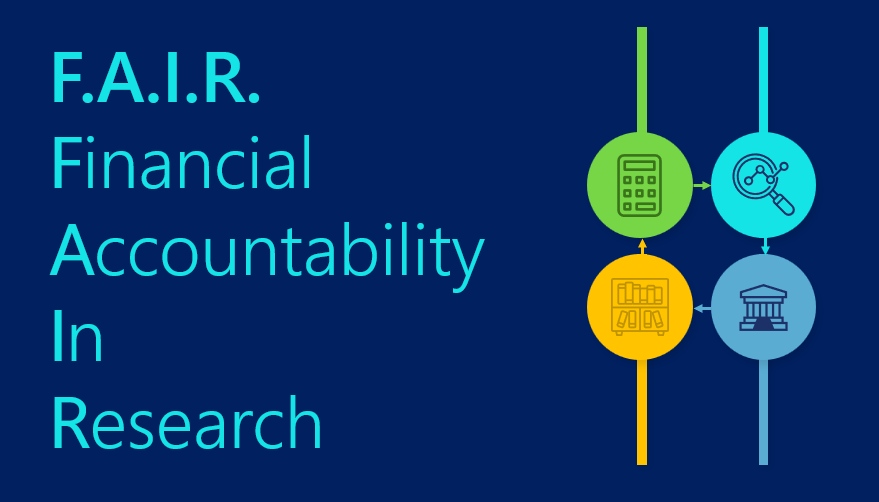
- JAG’s FAIR Model: The third option, JAG’s refined Financial Accountability in Research (FAIR) Model, with a Research Information Services component, represents a fundamentally different philosophy and approach. Rather than treating research support as undifferentiated overhead, FAIR explicitly recognizes Research Information Services (“project-specific costs related to journal subscriptions, database access, institutional repositories, and related resources”) as Essential Research Performance Support (ERPS), creating transparent, usage-based attribution for information infrastructure investments.
FAIR Model’s Evolution: From Two to One
The community feedback to JAG’s initial approach revealed strong support for hybrid approaches that balance transparency with administrative feasibility. The resultant FAIR model incorporates the best elements of both original proposals while addressing implementation concerns raised by research administrators, finance officers, and service providers across research institutions.
The resultant model operates through a dual structure:
- Research Performance Costs (RPC) enable direct charging for specialized, high-value services that benefit specific projects, ensuring full cost recovery for premium resources while maintaining broad access to essential infrastructure.
- Essential Research Performance Support (ERPS) encompasses fundamental research infrastructure that benefits the broader research enterprise, including Research Information Services as an explicitly recognized component. This shifts library and publishing-related expenses from facility allocations in the current Facilities & Administration (F&A) model to transparent, strategic cost categories and recognizes that modern research depends on a sophisticated information infrastructure that deserves strategic visibility and sustainable funding.
Research Information Services: Bringing Library and Publisher Value into the Light
Under the current F&A methodology, library expenses remain buried within facilities overhead pools, distributed through allocation factors that bear no relationship to actual research support. A faculty member managing multiple grants requiring extensive database access, institutional repository services, and specialized research librarian support will recover the same library allocation as a colleague with minimal information service needs. This systematic inaccuracy creates cross-subsidization issues while rendering library contributions invisible to research administrators and institutional leadership by tying library value to the library building.
FAIR fundamentally transforms this dynamic through the Research Information Services (RIS) component. Instead of allocation-based distribution, RIS enables usage-based attribution that reflects actual information services supporting each federal award.
Modern research information services represent substantial institutional investments: multi-million dollar database portfolios, institutional repository systems, digital preservation infrastructure, and specialized research support staff. These costs deserve recognition as essential research infrastructure rather than administrative overhead. The FAIR Model recognizes this.
The implementation of FAIR would address both visibility and sustainability challenges that have persisted under traditional allocation systems. Research offices would have insight into how information resources support their portfolios. Finance departments would achieve more defensible cost attribution methods. And, most importantly, libraries would have the opportunity to gain strategic positioning as measurable contributors to research success rather than invisible cost centers.
Implementation Pathways: From Simple to Detailed
FAIR’s refined model accommodates diverse institutional capabilities through scalable implementation approaches, each designed to improve cost transparency while respecting institutional capacities.
FAIR offers three implementation pathways for institutions.
- Simple (Base) Option: The most basic implementation of FAIR combines Research Information Services (RIS) with Essential Research Performance Facilities (ERPF), accounting for 10% of a project’s total cost. Institutions can extract identifiable library-related costs from current overhead cost pools and present them in this combined rate. This approach requires few system changes. This foundation approach works with existing financial systems and staff capabilities, providing a starting point for institutions beginning their transition to usage-based cost attribution. The strategic value is its minimal administrative burden; it is consistent across all projects. A significant drawback is its potential to under-recover expenses and cross-subsidization risks, where high-cost resources are subsidized by standard project usage.
- Detailed (Expanded) Option: Institutions with enhanced administrative capabilities and more complex research portfolios have the option to implement more sophisticated cost attribution methods that reflect actual service utilization patterns. This approach moves beyond broad allocation factors toward activity-based costing. The Detailed Option better accounts for actual federal award expenses and improves accuracy. Institutions that want an internal recharge system would implement this option. With this option, research offices gain visibility into information service utilization across their portfolios. Principal investigators would have more informed decision-making capability about information services for specific projects. The option benefits institutions with diverse research portfolios and substantial information service investments.
- Detailed (Expanded) Option + Research Performance Costs (Direct Charging): The most sophisticated implementation level achieves project-specific RIS cost calculations through comprehensive tracking systems. While requiring substantial administrative investment to establish, this approach delivers precise cost attribution that aligns with federal cost principles and provides complete strategic control over information service resources. This comprehensive implementation enables accurate activity-based costing for information services, direct charging capabilities for specialized resources, and strategic resource allocation based on actual use. This level of precision supports accurate cost recovery of the actual cost of research.
Recognizes Research Diversity
FAIR’s flexibility extends to recognizing that different research requires different information service portfolios. Clinical trials demand regulatory databases, patient management systems, and clinical data platforms, which incur substantial licensing and compliance costs. Applied research projects require industry databases, patent resources, and market intelligence platforms. Basic research utilizes specialized journals, advanced analytics tools, and fundamental research databases.
Discipline-specific requirements add complexity. Engineering projects may require technical databases and specialized software libraries. Humanities research might need digital manuscript collections and linguistic corpora with unique licensing arrangements. Social sciences often depend on proprietary survey data and statistical analysis platforms.
Project type differentiation enables cost attribution based on discipline or project type rather than broad allocation methods that may disadvantage certain research areas. Libraries can develop tailored service portfolios that align with their institution’s research profiles.
Libraries as Research Infrastructure
FAIR represents an opportunity for libraries to position themselves within the research enterprise. Instead of cost centers, libraries become essential research infrastructure with transparent cost attribution and measurable contributions to research success.
This transformation requires proactive adaptation. Libraries will need to develop clear service portfolios with defined cost structures, implement activity-based costing systems that document resource utilization, and establish measures to demonstrate research impact and value. Shifting from passive content provider to active research partner will enable libraries to justify investments and present a clear return on investment to institutional leadership.
The strategic positioning extends beyond cost recovery to genuine partnership in research success. When library services become visible components of research budgets, library professionals gain opportunities to contribute strategic expertise about information resources, participate in research planning discussions, and advocate for sustainable infrastructure investments based on demonstrated value rather than goodwill.
Publishers as Partners
FAIR’s recognition of Research Information Services as essential infrastructure creates new opportunities for scholarly publishers to align their business models with institutional funding realities. By positioning content and services as measurable research infrastructure rather than discretionary purchases, publishers can develop offerings that support sustainable access while meeting federal mandates for transparency and accountability.
FAIR’s structure enables publishers to work with libraries to be recognized as contributing to essential Research Information Services. FAIR provides the opportunity to provide cost attribution for scholarly communication services. Article processing charges, database access, and compliance tools can be appropriately categorized based on their role in specific research projects or general research infrastructure.
Publishers can leverage their expertise in manuscript submission systems, peer review platforms, data repositories, and compliance tools to position themselves as essential partners in research infrastructure rather than traditional vendors subject to library budget constraints. The transformation from vendor-customer relationships to collaborative research support partnerships represents a significant opportunity for the scholarly communication industry.
Managing the Transition
Assuming for a moment that the federal government adopts FAIR, it is worth recognizing that FAIR implementation will require careful change management to address concerns from multiple institutional constituencies. Research administrators typically focus on administrative burden and principal investigator acceptance. Finance departments prioritize implementation complexity and audit defensibility. Institutional leadership emphasizes financial impact and competitive positioning.
A phased implementation approach will address these concerns by enabling institutions to start with simplified methods and add sophistication as capabilities develop. Critical success factors for implementing FAIR include appropriate pacing, comprehensive stakeholder communication, and a realistic assessment of institutional capabilities. Institutions can achieve substantial FAIR benefits without committing to the most complex implementation approaches immediately.
Why FAIR Matters Now
The stakes are high; the current moment represents a critical juncture for the research information infrastructure. The alternative approaches under congressional consideration — a blanket 15% cap or simplified negotiations that ignore information services — would represent significant setbacks for the sustainability of scholarly communication and library strategic positioning in the research enterprise.
FAIR offers a path forward that recognizes the reality of modern research dependence on sophisticated information infrastructure while addressing government concerns about accountability and transparency. The model enables sustainable funding for essential services while providing clear visibility into how taxpayer investments support research success.
For libraries, FAIR represents an opportunity to transition from invisible cost centers to visible, measurable contributors to research excellence. The framework enables libraries to be involved in strategic problem-solving, sustainable funding, and genuine partnership in research success.
For publishers, FAIR creates opportunities to align business models with institutional realities while supporting federal mandates for transparency and open access. The recognition of information services as essential infrastructure provides a foundation for sustainable scholarly communication that serves both public interest and commercial viability.
Seizing the Moment
Federal research funding reform will proceed with or without input from the library and scholarly publishing communities. I believe that FAIR represents our best opportunity among the models under consideration to ensure that research information services receive appropriate recognition and sustainable funding. The model’s flexibility accommodates diverse institutional capabilities while providing clear pathways for libraries and publishers to partner with each other and institutions to demonstrate value and justify investments.
The stakes extend beyond our immediate professional interests to the broader research enterprise’s information infrastructure needs. Modern research depends on sophisticated information. FAIR provides the framework to achieve recognition of the actual costs of research while addressing political concerns about accountability and transparency.

Discussion
2 Thoughts on "Guest Post — From Overhead to Essential: The FAIR Model Recognizes Research Information Services as Essential to the Research Enterprise"

Thanks for this explanation Hilary – it seems like an interesting approach. It is a shame however the acronym is one that has been in use globally for just on a decade relating to research data – FAIR – Findable, Accessible, Interoperable, Reusable. https://www.go-fair.org/fair-principles/ Having two acronyms in the same space with very different meanings and applications might cause issues.

Someone commented this sentiment to JAG early on. Alas.