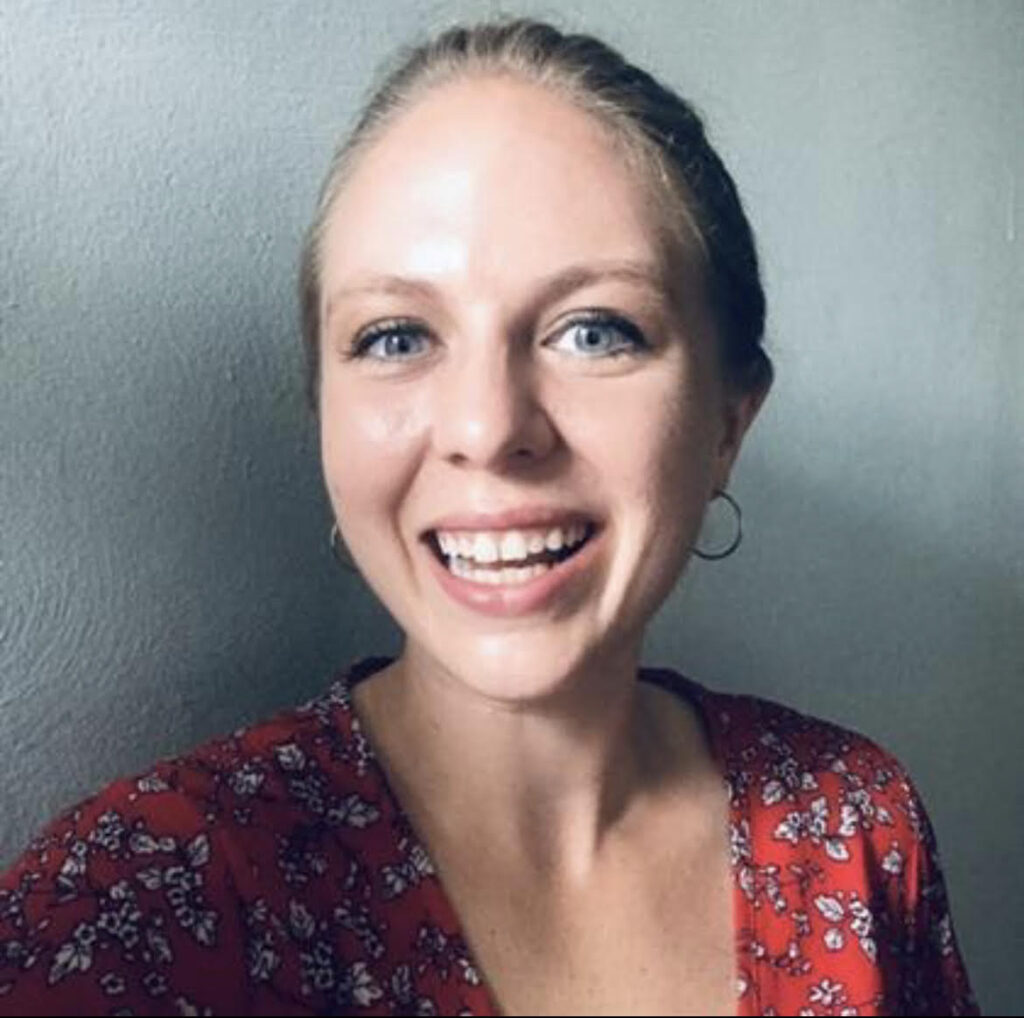
As your co-chairs of this year’s New Directions in Scholarly Publishing Seminar, we’re excited to give you a glimpse of what’s planned for the 2-day event, October 7 and 8, in Washington, DC.
New Directions is where big questions in scholarly communication meet lively conversation — and this year’s program is designed to spark both. From timely themes and thoughtful speakers to intentional spaces for connection, we’ve built an event that invites participation and exchange. Below, we share what we’re most looking forward to: Ginny on the framing theme and the ways we’re encouraging conversation, and Lettie on the speakers and sessions that will bring these ideas to life.

The Programming
Ginny: One thing I’ve noticed at conferences over the years is that the conversations often feel like Groundhog Day, where we revisit the same themes again and again. And that’s not a criticism! I love this work, and it’s the reason I keep showing up. But it does make me wonder, why do we still find ourselves grappling with the same questions we were asking a decade ago, whether on stage at an event or in the pages of The Scholarly Kitchen?
Part of the answer certainly lies in the pace of progress. In scholarly communication, as in the world at large, meaningful change is incremental and can take decades. But there is another layer to this repetition: incentives. It’s not that our community lacks the will to change matters such as the outputs we publish or the way we financially sustain ourselves, but rather, the incentive structures embedded in the ecosystem continue to shape behaviors—and those structures have proven remarkably resilient.
One of the privileges of serving as co-lead for New Directions is the opportunity to help shape the theme. When I began planning for this year’s program, I kept returning to the question of incentives and how the incentive structures in research, industry, and government influence the more granular conversations we have about impact metrics, research integrity, and funding. This line of thinking brought to mind Charlie Munger’s oft-cited observation that “incentives are superpowers”—people reliably act within the systems they are given, often rationalizing inefficiency or even harm along the way. That framing feels especially relevant to our community, where we yearn for reform, but often find ourselves constrained by the incentive structures that comprise our ecosystem.
Since I first began considering this framework in 2024, the landscape has shifted in ways that make the theme feel even more urgent. In the United States, for example, politics have grown less friendly to science. Given the government’s role as one of the largest funders of research — and arguably the ultimate system-shaper in the U.S. context — this shift, and the resulting fallout we’ve witnessed in the research landscape over the past nine months, underscores just how responsive the ecosystem is to changes in the structures on which it rests. With that responsiveness comes fragility: when the system shifts, so too does the behavior of the actors within it. But it also reveals opportunity. If the structures within which we live are powerful enough to direct the course of research, then reshaping them — even incrementally — can open pathways toward greater trust, transparency, and progress.
This year’s seminar will provide a timely venue for revisiting familiar conversations: the value of different kinds of research outputs, the sustainability of funding, the relationship between open science and research integrity, and the evolving role of peer review. I hope that by viewing these issues through the lens of incentives, we can uncover insights and keep asking “why” in ways that push the conversation forward in meaningful directions.
Lettie: From the opening keynote to the ever-popular “reverse roundtable” discussions, I am looking forward to hearing from speakers and attendees about how these incentive structures are evolving in our community. Some sessions will take on this topic head-on, like “From Impact Factor to Impact Framework: Transforming How We Evaluate Research.” And others, like panels on “AI as Reader, Author, and Reviewer” and “Transparency in Research to Support Credibility in Trust,” will pull this red thread of incentives throughout the discussions.
I’m especially curious to learn more about how the drastic anti-science policy and funding changes in the US are impacting organizations in our sector. “A Fighting Chance: Funding and Support Strategies for the Current Moment” will certainly address these themes, but I suspect it will be a persistent thread of conversation throughout the seminar. Just as artificial intelligence has been a topic that finds its way into every conversation lately, I expect the same will be true for the destructive ripple effect of policy and protocol disruptions during the last ~9 months in the US.
The “Accessibility Coffee Talk” will feature a live demonstration of accessible publishing in action, allowing attendees to better understand the experience of inaccessible scholarly content. This session will underscore how publishers are incentivized to achieve accessibility compliance to reap a multitude of benefits for both readers’ experiences and publishers’ bottom line.
Of course, I’m also jazzed for our networking events, from happy hours to group dining options, which provide extra time to process these conversations in more casual settings. Even with all the tumult coming out of Washington, DC, it will always be one of my favorite places to visit and meet up with colleagues and friends alike!
The People
Lettie: First up, I want to acknowledge the incredible working group of volunteers who crafted and curated this seminar, many of whom will be attending either online or in person. And, of course, the SSP people who make everything possible.
Back to the program itself: I’m super excited to hear from our keynote speaker, the incomparable Meagan Phelan, Communications Director for AAAS. Given her creative and strategic work with the Science family of journals, I’m confident Meagan will offer an engaging view on the future of research in today’s political climate, as well as practice tips for publishers in facing related challenges. I’m confident her talk will be a great way to kick off the seminar.
One of the things I appreciate about New Directions is the unique voices and speakers we feature who don’t typically present at SSP events. For instance, Neil Gilstrap, Chief Technical Officer at Cadmore Media, will add great value to the accessibility panel, along with Simon Holt from Elsevier and Wendy Stengel from the Library of Congress. “Credit Where Credit It’s Due,” addressing peer review incentive structures, will feature the Managing Director of People Insights Lab, Lauren Coillier Spruel; Georgetown University’s Head of Research Services, Ryan Johnson; and the American Historical Association’s Sarah Muncy.
Ginny: While Lettie highlights the brilliant speakers we have lined up, I want to shine a light on something a little different: the magic that happens when people come together. There are so many ways to hear from leading voices in our field — you can read The Scholarly Kitchen, attend webinars, follow industry blogs, or even check out conversations on BlueSky — but the real treasure of a conference lies in the spontaneous, thoughtful hallway conversations and the connections you forge over a meal or a drink.
This year, we’ve worked hard to make those connections as accessible as possible, both online and in person. We’re adding a bit more structure to our famous Social Hour following the first day and introducing Dinner Dialogues, modeled after events like Charleston’s Dine Arounds. These small-group dinners offer a casual, welcoming way to meet fellow participants and dive into rich discussions beyond the formal sessions. We’ve also reimagined the roundtable session, splitting it into two shorter segments that bookend the first day — one after the keynote, before lunch, and another at the close of the day — so conversations can naturally flow into lunch or Social Hour.
And we didn’t forget about virtual attendees! If you’re joining us from beyond DC, we’ve created a new digital “break room” space (big thanks to Zsolt Silberer for coining the name!). Think of it as an informal, facilitated chat room where you can drop in before sessions or during lunch breaks. Our facilitators are preparing light, enjoyable prompts to spark conversation — no awkward icebreakers required — so you can capture a bit of that “hallway chatter” online. For those who prefer one-on-one connections, we’re also piloting a virtual buddy program, pairing attendees in similar or complementary time zones and offering suggested discussion questions to get the conversation started.
New Directions is intentionally more intimate than some of the larger meetings out there, and that’s a huge advantage. It makes it easier to strike up conversations with new colleagues and walk away with fresh perspectives you might not have encountered otherwise. As co-lead, my goal was to build on that strength to ensure that participants find just as much value in connecting with each other as they do in engaging with the program itself.
Join us!
We hope you agree this is a must-have event, and we’ll see you next month in Washington, DC. The seminar runs from Tuesday, October 7, to Wednesday, October 8. There’s lots of room for everyone online, but in-person space is limited, so get your seat today!