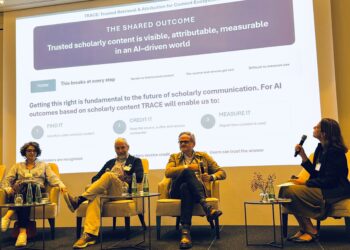
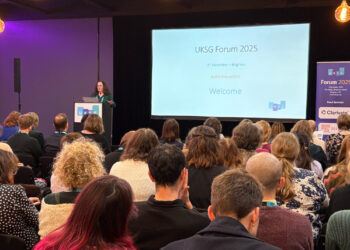
Earlier this year I was invited to take part in a workshop organized by Sense about Science and Sage Publishing on how to support and promote the role of librarians, specialist journalists and others in the battle against misinformation. It was part of a collaboration between the two organizations on the importance of public-good curation as a counterpoint to fact-checking or censoring bad information. Their goal was to create the first-ever guide to good information curation and its public benefit, empowering everyone who curates scientific information to articulate and advocate for what they do and make the case for more resources.
That guide – The People’s Case for Curators – was recently published, and I was privileged to discuss it with Tracey Brown (Executive Director of Sense about Science) and Camille Gamboa (Associate Vice President, Corporate Communications at Sage). You can learn more about the background to the guide and its importance in this interview with them.
What was the initial impetus for developing The People’s Case for Curators and why did your two organizations decide to partner on this?
Camille: We conceived of the idea over a year ago, when the world looked a lot different. After COVID – as you might imagine – trust in science took a dip, but by the end of 2024, it was slowly moving back up. We wanted to safeguard that trust by creating a framework that “lifts the curtain” to expose how scientific information is created and vetted before it gets to the public (as we know, transparency and trust are correlated!) in an easily digestible and communicable way.
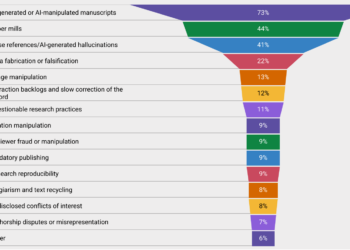
Since January 2025, things have become even more complicated – we have ongoing issues that accelerated this year – trust problems associated with AI or the “inside baseball” issues that Scholarly Kitchen readers are all too familiar with such as paper mills, mass retractions, bad peer review, etc. Even more recently, we’ve seen the politicization of science proliferate – taking action in the name of science for political gain. I’m very interested to see what the data will tell us about the public’s trust in science in 2025, but my guess is that a need for a guide like this is only greater now.
Both our organizations wanted to increase public trust in science through this project and – at least for Sage – the use of science in public life. We believe that it’s science-backed decision-making, policy-making, business operating, etc. that will most benefit the world. We know that increasing this use is a long-term goal, but we think it’s worth it to work toward even slow progress.
Tracey: Yes, and at Sense about Science we were looking at the huge shifts in the way that people are consuming information, and seeing that, alongside fabrications and unfounded claims on social media platforms, many people were wondering whether they can believe anything at all. Add to that the increasing politicization, and it’s a minefield for science communicators, who can be perceived as taking political sides.
In that context, we felt that there was a whole section of our society missing from public thinking — the people who help ensure rigor and routes to evidence, who work to standards of impartiality and, as Camille says, transparency. We started looking at the practices and values of those people and where they might help the public debate.
Camille: Sense about Science is an independent charity and Sage is an independent publisher, so we have the freedom to take on projects like this that won’t pay immediate dividends.
Tracey: That mattered a lot to us. It’s a journey into the unknown — how values that were ironed out over the 19th and 20th centuries, as the science of knowledge generation became regularized, can be rediscovered in the 21st. The first step is getting public-good curators to make their values and practices more explicit, more visible in public discussion. We were starting from a place where many of them know what they do and why, but it’s not being articulated in popular discussion.
What do you mean by “public-good curators” – who are they and what do they do?
Camille: I’m glad you asked because one of my favorite things about this report is the conceptualization of this term. Let’s break it down to explain why it matters (and why you should love it too!).
- In our report, “curators” are individuals dedicated to transparency in sourcing and evaluating information. They guide society through the complexities of today’s information landscape, connecting people with trustworthy sources and empowering them to think critically.
- We use “public good” to highlight that, as curators organize knowledge and improve thinking, they genuinely serve society. Public interest is at the heart of their work.
There are lots of roles and functions that provide this service and provide it well. In our report, we focused on editors, research integrity officers, librarians, and specialist journalists – those closer to the scientific curation pre- and post-publication as they help evaluate what makes it to the public.
Tracey: It has been a challenge to formulate that. There isn’t a language, but we urgently need one as we talk more and more about the nature of what we know and how information reaches us. We workshopped it with representatives of all the groups Camille mentions, and many others. We looked at it down the other end of the telescope. Put yourself in the shoes of someone highly skeptical, who mistrusts authority, perhaps with good reason – and that includes scientific authority – well, assuming your good faith in seeking information, who is there to help you? Who is adhering to standards and principles that you can see and appreciate?
That is how we began drawing out our list. But it is an ecosystem, with lots of roles and no hard borders. When we got people in a virtual room together, from different parts of that system, from different parts of the world, we saw a lot of unity around care for the state of public discussion, independence, transparency, and impartiality. They saw themselves in each other, despite performing a wide variety of roles.
Camille: As an example, in his recent coverage of our guide, James Butcher, who runs the Journalology newsletter, asked somewhat cheekily if his work displays the characteristics of a public good curator, and I’m here to say it does. Public-good curators organize vital information in a way that makes it accessible, reliable, and high-fiber for public consumption. It’s likely many reading this right now do good curation work as well.
What do you see as the main challenges for these curators and how can we best tackle them?
Tracey: I was really struck by the contrast between the commitment shown by librarians we interviewed – to bringing knowledge to people, to understanding sources and to giving us the tools to understand them too – and the pressures that libraries at every level are under. They are not resourced or given sufficient policy backing to do the very things that we most need as a society. Our conversation with Elaine Westbrooks of Cornell University Library reminded me repeatedly that making sense of the world – from education statistics to climate change – lifts us up to full democratic participation. Librarians enable and empower.
The values of public-good curators are not expressed explicitly enough for the times we are in.
Camille: Yes, the greatest challenge facing curators is their “invisible” role—they are often undervalued or misunderstood by the public. This lack of visibility can lead to confusion with curators who do not adhere to high standards and are (sometimes blatantly) biased.
In our (many) conversations with science curators for the report, objectively providing pathways to information was one of the strongest themes. As Dalmeet Singh Chawla, Freelance Journalist and report contributor stated, “I start with my research then speak to a number of people so I understand the scientific consensus and what other views are. Then I ask myself: how much weight do I give to one view and how much weight do I give to the other? Juggling that is a significant amount of the work that we do.”
Public validation and value are powerful. By sharing public-good curators’ commitment to transparency and impartiality, we can help the public recognize and value their essential contributions.
Tracey: We need more public noise. We get the behavior we reward, so if we truly value having people upholding public-good values and standards when they shape our information spaces, we should be saying so at every opportunity.
In a sense everyone working in scholarly communications is – or should be – a public-good curator. What are some examples of how we can individually help build trust in science?
Camille: Every scholarly communications professional can help build trust in science by consistently upholding and communicating the standards that guide our work—such as those set by the Committee on Publication Ethics (COPE). I’m not talking about getting into the weeds but sharing the basic principles when we find a natural opportunity is helpful. By openly sharing our commitment to these principles and explaining how they shape our decisions, we demonstrate integrity and foster transparency.
I’m sure all publishers are being contacted by journalists – increasingly from the mainstream – about one-off science issues. If we can respond with clarity and authority about our standards and codes – lift the curtain just a tad with every interaction, we can help.
Tracey: I agree very much with that. Sense about Science has always pressed researchers to say more about the context of the science they communicate – not just what they found but how they went about it and what is uncertain. Public-good curators have a huge role to play in putting that context around scientific information. Remember that much of what we assume about the standards that should be upheld is not widely known. Just think about what you know when you read a report of a medical paper, for example. The area is highly regulated, there must have been ethical approval;, the research design and the statistical analysis will follow conventions that, in turn, the editor and peer reviewers will have looked for;, payments from interested parties should have been declared;, the journalist writing about it is a specialist medical reporter… As someone in the system, you think all of that without missing a beat. Now imagine it for a member of the public. What differentiates that story from a piece of marketing? It’s up to all of us to make that clear.
We can also show people how to be effective skeptics, rather than cynics. Tell them what you look for to bottom out a claim, so they understand the process of developing reliable knowledge, and can look for it too.
We recently presented and discussed the guide during Evidence Week in the UK Parliament and at the European Parliament in Brussels. Politicians immediately made the connection between policy support for the information infrastructure and their concerns about false narratives. So there is something to play for here.
What impact do you hope The People’s Case for Curators will have and how will you measure it?
Camille: Our hope is that this guide provides a framework and a vocabulary to the science community to help us all easily explain that good science curation is being done by expert, trained, experienced professionals – thoughtful humans who can be trusted. We hope it becomes a powerful communication tool for the community that lifts values that will serve society.
As I mentioned, this guide serves a long-term goal, but we’ll measure success by tracking the conversations it sparks, its adoption in professional settings, and its influence on policy and public understanding. We welcome feedback and look forward to seeing how this guide helps advance the values that serve society.
Tracey: What will good look like? The codes and standards and principles under which public-good curators operate will be part of our general commentary. We will value them as public assets.
And we will see other sources of information held up against those standards. For example, the behavior of public-good curators is the opposite of the obscured algorithms dictating streams on social media platforms. If those platforms were similarly transparent they would say, ‘you’re being shown this reel is to keep you online for another 30 minutes so that you can be shown 16 more adverts!’
First, though, we need to get talking, all of us, about public-good curation, so that we have a common language and much greater visibility for the work that protects people’s pathways to knowledge.