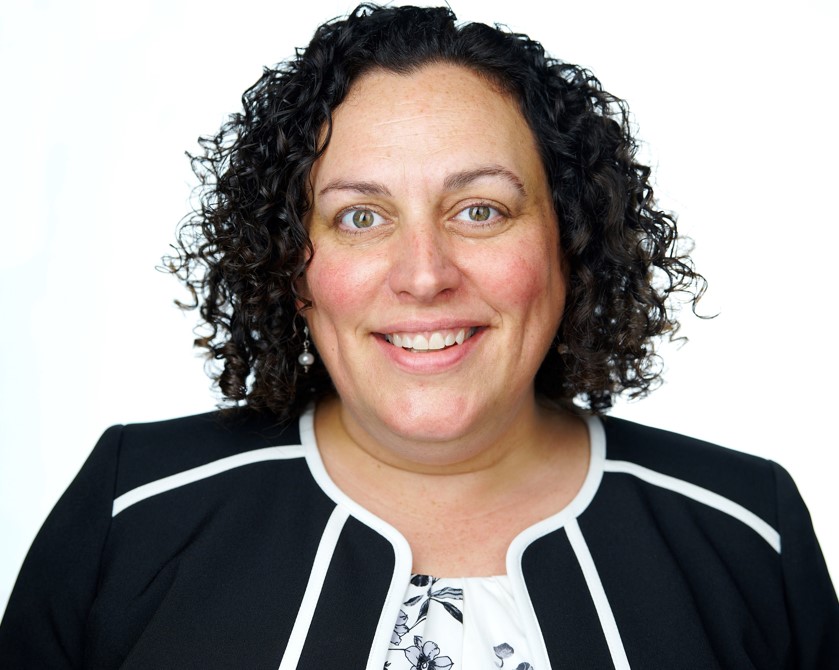
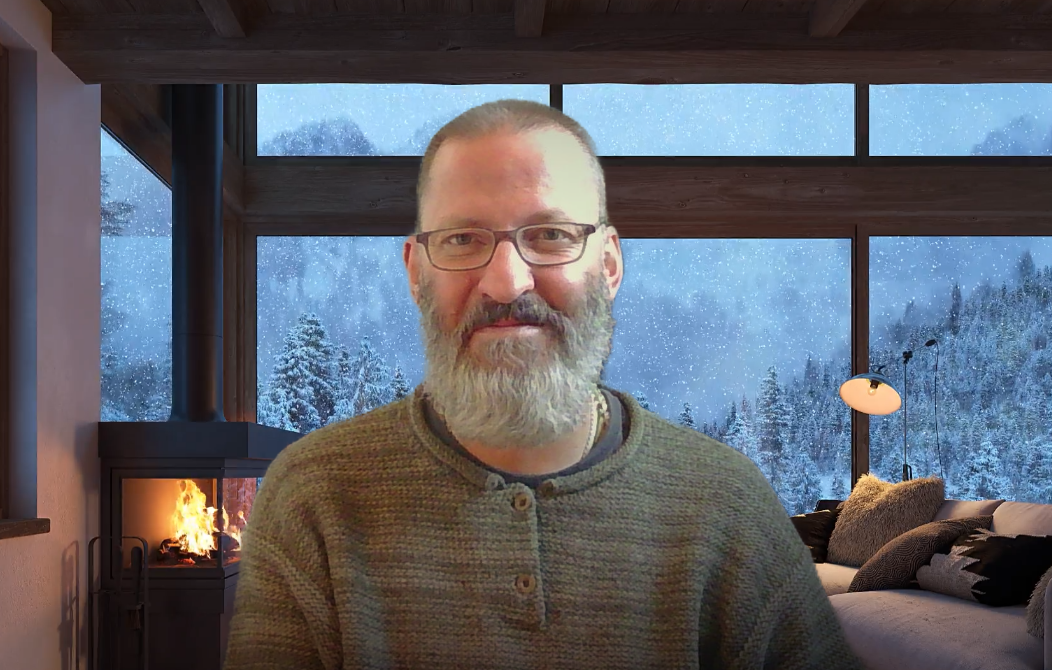
Editor’s note: Today’s post is a conversation between Byron Laws and Anna Jester, members of the Mental Health Awareness and Action Community of Interest (CoIN). They discuss the challenges of unemployment and the impact of industry-wide uncertainty on personal and professional well-being. Byron shares his experience with the practice of meditation as a tool for managing stress and maintaining mental health. Byron is Senior Vice President at TNQ Technologies where he oversees high-scale editorial and production workflows. Anna is a Senior Manager in Partner Success at Wiley in the Partner Solutions division.
Anna Jester: Members of the SSP CoIN for Mental Health Awareness and Action often share efforts they make to find balance in various areas of life. Would you mind sharing your experience with meditation, benefits you’ve identified, and discuss sharing it with others at recent SSP Annual Meetings?
Byron Laws: In late 2025, I found myself unemployed for the second time within an 18-month period. I had settled into a weird in-between zone, aiming to maintain my basic daily schedule but also occasionally staying up all hours and having a hard time engaging the next day. Just when I had all but decided that there was no longer a space in scholarly publishing for me, for the type of job I had held for 25 years, my career was revived through a connection made by a longtime friend and former colleague. I find myself once again in the thick of things, heading sales at Lumina-TNQTech.
After all of this recent disruption, it’s a great time for me to reflect on my own mental health and wellness!
Finding myself twice unemployed in such a short period, after enjoying multiple long-term scholarly sales jobs, I believe speaks to the state of the scholarly publishing industry in general. All parts of our professional ecosystem are experiencing a level of progressive change (evolution) that can be quite difficult to manage, regardless of the career stage we are in. The norm has become questioning everything: models, results, and action plans for whatever’s coming next.
I’ve always looked to those with more experience as role models, as well as for assistance, guidance, and counsel. It can feel disorienting to start over in a new job while simultaneously navigating ongoing industry shifts. Many of our work lives have changed dramatically in a short period of time. And now I find myself in the position of being one of those with more experience and often serving as a role model.
What is becoming really clear to me is that even those of us who have been long-established in our industry roles can no longer call ourselves experts. Scholarly publishing is changing so quickly that you’re required to be a beginner.
 Anna: Constantly anticipating change, in and beyond our industry, can still leave us surprised at the transformation over even two years. Some processes are already forever changed, incorporating AI tools. Are there topics where you plan to wait and see what happens?
Byron: I’m constantly monitoring all kinds of disruption, including AI tools, the emerging ways in which everyone is using them, and shifts in funding sources worldwide. In this later stage of my career, I had been questioning whether I wanted to continue working a traditional day job or prefer to shift my income and expenses to a model that affords me doing something else. Perhaps something more meaningful to me personally, giving back to the world, instead of relying on it? So, I was watching and waiting, resting and preparing.
I’ve found that taking a big leap, in your career or any other aspect of your life, often requires a period of gathering strength and creating a solid foundation before we’re prepared to jump. So, during my unemployment, I intentionally decided not to push myself too much: reading, relaxing, and enjoying time in nature and with close friends and family. I did often question whether I should be doing something more than keeping my own counsel and holding my own ground, but it worked out just fine.
Anna: It’s a question with multiple, possibly inconsistent, answers. Many people in our generation feel we aren’t working hard enough if we aren’t being as productive as possible. When I play an MMORPG as part of an online group, there’s frequently a player in my network who can cast helpful spells. I can also use potions, or even just stop and stay in a safe space to help restore virtual health. I might wear gear that benefits and protects my character. It’s fascinating to me that this completely standard and normal gameplay doesn’t always remind the humans playing the game to embrace taking time to restore, increasing their health, or protection. Whatever we’re battling, having a network of others and various tools that you switch out as needed will help you now and during your next level.
Byron: Rest and recuperation are required to come back to one’s center. Not only when you experience major inflection points in life, but on a regular basis throughout your day-to-day life experience. There are two different ways in which we describe how we’re doing. Asked, “Hey, Byron, great to see you. How are you doing?” My patent response has been, “Oh, you know. Been better, been worse. I’m doing OK. How about you?”
Then there’s the real response that many will never share, or perhaps only with a therapist or close friend. A high percentage of humans are feeling a certain sense of ongoing and pervasive desperation in life, questioning deeply what we’re doing from day to day, minute to minute. Does it have value? Is it fulfilling? There’s a certain inertia in our daily lives that dictates our schedule. And behind all of that is a pervasive questioning of value. I’ve often asked myself, “How am I really doing? Am I okay?”.
We take cues from other people, but the bottom line is determined by what we’re feeling inside. Most would agree that we should eat well, exercise, get good rest, and spend time in nature. Incorporating mindfulness, meditation, or other types of practices can help us recover from the ongoing stresses of this life experience. It turns out that we are not always okay, and that we become less so when we don’t manage ourselves with careful compassion.
So, most of us are experiencing some level of mental, emotional, and even physical pain, but very few are adept at managing these conditions. Developing healthy coping strategies is crucial. Physical pain in the body indicates something that needs attention. To avoid damaging ourselves we learn to stay away from certain stimuli. We make meaningful improvements in our life situations based on pain we’re experiencing because it calls our attention to areas that need correction or maintenance. The same goes for existential pain.
Anna: Identifying what we could be doing to promote mental health once we’ve started our careers is an interesting topic. Can you share how you strive for balance, or help ensure your own mental health is something that you are specifically giving care of?
Byron: My own inner practice and subsequent meditation teaching journey spans the last 20 years. Originally a method of managing my own mental, emotional and physical pain, meditation has become a method by which I manage the ongoing stress of day-to-day life. I’ve studied meditation intensively through both extended periods of training in India as well as through my own inner journey and have found benefits such as deep stress release, a growing capacity to work with challenging situations (and people!), increased concentration, better “eyes-open” performance, and the ability to face my own deeply-held trauma and confronting emotions.
Over time, I have found a methodology that works well and has improved my life. Twenty minutes of morning and evening meditation practice is now non-negotiable for me and is manageable in the context of day-to-day life. My own stillness practice has given me the gift of helping others find that same stillness within themselves.
When I first began to meditate, I was self-taught, using guidance from various sources. Without personal instruction I found it was nearly impossible for me to sit quietly with my eyes closed for more than a couple of minutes. After fits and starts of meditating over a couple years, I studied many things: Christian mysticism, the teaching of the stoics, such as Marcus Aurelius, along with Buddhism, Taoism, and Vedic worldviews. I found myself meditating using a concentration technique and built up a good tolerance for the practice, often meditating for two to three hours at a stretch.
I enjoyed the experience, and wanted to deepen it even further, but between being a single parent and full-time employee, I found that there weren’t enough hours in the day. I now practice and teach Vedic Meditation, which is a mantra-based technique. You’re given a personalized mantra (or sound) that is repeated silently inside the mind. As the attention is placed effortlessly on the mantra, it becomes increasingly subtle, allowing one to drop into a deep and very still place within. This technique is not directed at deepening the experience in “eyes closed” meditation. Rather, it is meant to open our awareness to our true inner nature, a state of innocent and benevolent awareness, which then naturally deepens our “eyes open” experience. In other words, we don’t meditate to become professional meditators, but to become more professional human beings. I’ve found that 20 minutes twice daily is sustainable even in the context of a full and busy life experience.
My teaching practice focuses on teaching others how to find this quiet inner awareness that is always witnessing everything that is happening on the surface of our life experience. Practicing stillness has changed nearly every aspect of my life. The ways I accept, care for, maintain, and love myself have changed as I have developed a deeper level of awareness and acknowledgement of my own responsibility for the life experience I’m having.
And, of course, I’m a work-in-progress. Meditation practice brings things to the surface, so that one can see things more as they truly are, within oneself and in the outside world. This growing awareness helps one develop an appetite for change, and to be accepting of the time it may take to do inner work. Becoming aware we’ve been repeating actions and achieving undesirable results, the question becomes, “How long will I keep doing the same things, expecting different outcomes?”
While this inner work is deeply rewarding, it can also be quite confronting. When we begin cleaning up the inner garden, it has the effect of exposing new areas to the light of one’s awareness. These areas then become space for new growth or for old weeds to flourish. What do you want to grow?
You can plant fresh new ideas and habits or battle the “weeds” that can crop up in this newfound space. Becoming a willing participant in taking responsibility for one’s life experience can help long-standing and inaccurate internal narratives begin to fade. Asking oneself in any given situation, “What part of the experience I’m having right now is due to my own internal triggers, and what is actually due to the behavior of the other person?” reminds us that we can take responsibility for conditioned responses to external stimuli and begin to correct these narratives within ourselves. We can only do our own inner work. It can’t be outsourced to others.
Anna: We may need to contemplate what’s manageable, available, and probable before asking how we get there. What are some strategies you would recommend in 2026 for scratching the surface and starting.
Byron: We cannot assume that everything is wrong or needs fixing. Regardless of who we are, there are always many things that are working well and worth appreciating. Could I use some improvement? Yes. Do I have some areas where I’d like to focus and make some meaningful changes? Yes. All of us do. How can I start? Slow and steady wins the race, but even a long journey has to start somewhere.
Your inner practice may currently be a cup of coffee, savored in the quiet of the morning, before things get busy. Perhaps feeling connected to nature, taking a few deep breaths in preparation for the day. Connecting with ourselves on a regular basis and establishing new patterns of healing and self-attention is restorative to our bodies and minds. When one has ignored things too long a typical overreaction may be, “Now I will discipline myself and fix everything all at once.” This type of correction is generally not sustainable. Instead, to make some meaningful progress, I recommend being gentle and accepting of oneself, finding a starting place, looking directly at what’s working and what’s not, and then placing focus on what’s at the top of the list for improvement.
In the workplace, personal experiences have a direct bearing on our performance and results. When the circumstance is appropriate, respond to “Hey Byron, how are you doing?”, with something like, “Thanks for asking. I’ve actually been having a really hard time these last few months!” can open the door to a real connection with others. It can make space for a deeper level of sharing and connection, creating more meaningful relationships in the work world. It also gives other people permission to share their struggles. All of us can listen and point each other towards helpful resources. We can lean on each other as we walk through life. We’re all in this experience together and I think we should help each other.
The good news is that turmoil naturally leads to a corresponding period of calm. Just like nature, our lives have patterns and seasons. There will need to be a period of correction during which we can move forward. It’s important that we persist, especially when faced with difficult challenges. I remain deeply optimistic for all of us despite the challenges we currently face.
Anna: Historically also considering myself an optimist with relatively good luck, I’ve come to realize hopeful skeptic is a better descriptor, thanks to the book Hope for Cynics. Believing you’re an optimist but not feeling very optimistic had me questioning some things.
Byron: I feel it’s useful in the learning process to encourage skepticism within oneself. Healthy skepticism can lead to an inner investigation that yields a deeper knowledge and awareness of oneself. And, on a hopeful note, while I have recently gone through a very difficult period in my life both personally and professionally, I know it’s all going to be okay. What’s required is to keep bringing my best self into my life and my work. I’m determined to keep showing up. I work on not allowing myself to feel too defeated. We all get a little stuck at times. When I notice that I’m feeling this way, I turn my attention to doing things to look after myself and connect with others. I recognize more often that when I’m having difficulty in life there are people around me who are experiencing even more difficult challenges. Intentionally, shifting attention from one’s own situation to offering a smile or a kind word to others, is amazingly useful. I have occasionally been told by others, “You have no idea how much it meant to me that you were open to me sharing my experience and encouraged me when I was having a hard time. It changed my life.” Remove some internal distractions and see what happens. In all our beauty and all our difficulty and messiness, let’s not treat each other poorly. Instead, let’s become better humans.
Anna: Thanks for this conversation. I appreciate your willingness to talk about these topics.