Back in 2018, I first called peer review a function of “good karma” — you conduct reviews for other researchers/authors, and some will return the favor by reviewing your manuscripts when you submit to journals. So, in theory, your good actions will be paid back, but it isn’t always true.
Throughout 2025, I reviewed 45 manuscripts from 36 journals, of which 29 were journals for which I reviewed for the first time. What did I get in return? One of my co-authored articles was returned by a reputable journal without review after 13 months, despite regular follow-ups. Another, rather lucky one, received reviewers’ comments after 235 days. Several manuscripts couldn’t complete the first round of review because reviewers could not be found, and a couple of revised manuscripts couldn’t progress further due to the scarcity of willing second-round reviewers.
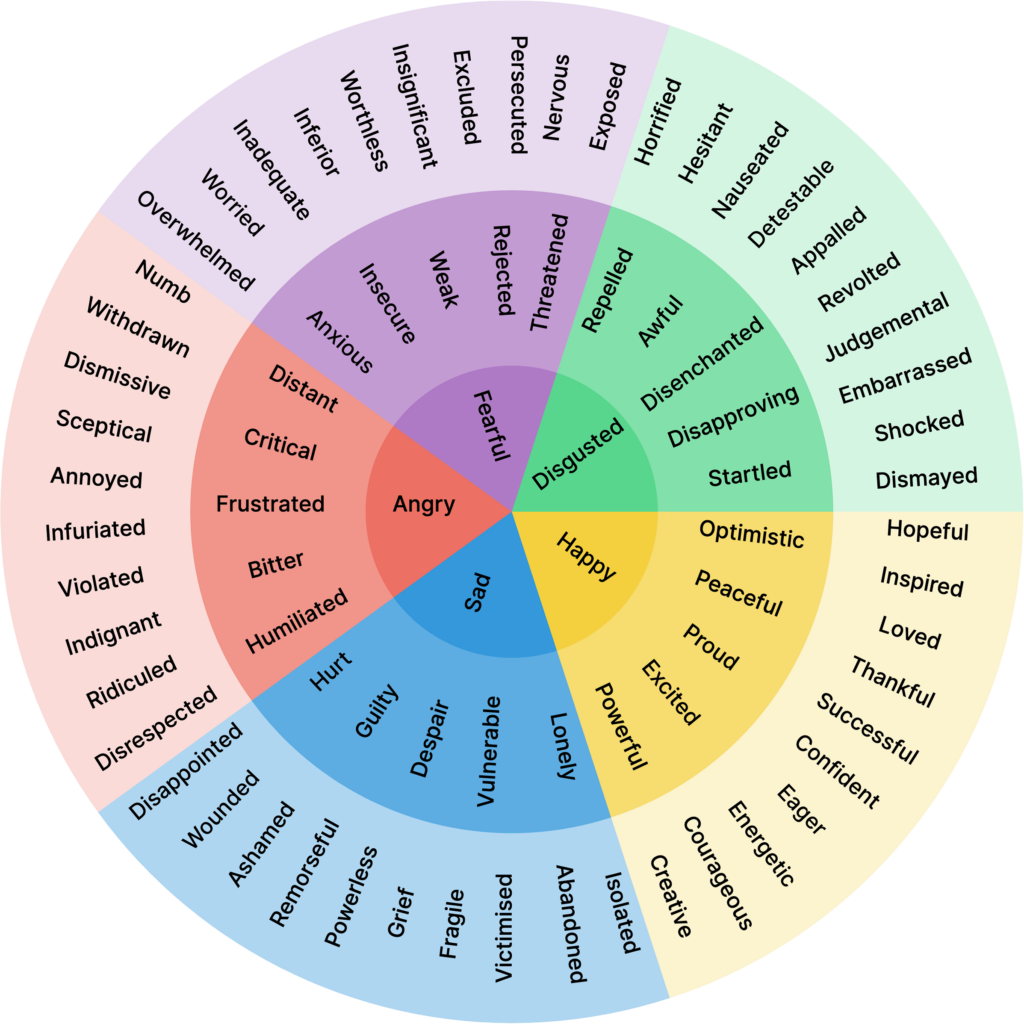
So, being utterly powerless against journals’ policies and trapped in the demand from academia to publish only in indexed journals, what am I supposed to feel? (See the range of possible responses in Figure 1.) Should I feel shocked and disgusted by the above decisions and delays? Sad and frustrated with the overall situation? Angry towards the whole publishing system as I got conned by it, despite religiously serving it as a peer reviewer? Should I feel afraid to fight back, as the publishers would blacklist my young co-authors and me? Or, should I feel defiant in my tiny domain?
I probably felt all of these. In the first six months of 2026, I received 41 invitations to review papers from different journals. And I decided to decline each of them as my protest to the broken chain of “good karma.” But who has actually won in my fight against the system? Apparently, the system won this round — but is my battle really over?
This personal story is an example where the relationship between journals and an author, who is also a potential peer reviewer, takes different turns based on authors’ emotions. Figure 1 demonstrates how many different emotions might be at play — along various steps of the publishing workflow with different stakeholders and actors at each step. As each fulfills their roles in scholarly publishing, do they consider counterparts’ emotions and respond to them thoughtfully based on the power they hold?
Authors’ Emotional Responses
Let me unpack the authors’ emotions further, since most readers of The Scholarly Kitchen are not from researcher cohorts. Article submission to a journal is a key step in starting scholarly communication. Selecting a journal is a matter of judgement and experience as we match our completed research to a journal and assess where it may best fit into the scholarly discourse on a global scale. This decision may also be influenced by mixed emotions, provoking scholars to overvalue their work with the excitement of sharing an article with the world. Authors often fail to align their research with the target journal’s scope, thus facing desk rejection, even after waiting up to several months. Rejection after review is probably the most emotional part of the publishing journey, but that decision is never fast. The more delay authors face during review, and the more rounds they pass, the more painful the rejection.
Even worse, authors cannot really challenge the process, which can feel awful. I’ve known authors afraid of even asking an editorial office the status of their paper despite four months having passed since the submission of a revised manuscript, in case the journal might treat the revised paper more harshly!
In my own example above, the rejection only came when we proactively wrote to the editor-in-chief’s institutional email address enquiring about the delay. They replied, explaining that the first review came back very quickly, but was not favorable, and they couldn’t secure another reviewer after 11 months of searching. We then offered two possible options, if the journal policy allowed: i) we could provide a list of potential reviewers who are not related to our work in any way, so that the editor may choose from them at their discretion, and ii) an editorial board member or an associate editor may act as a reviewer of our manuscript. These suggestions underscore our desperation, which was totally ignored by the editor-in-chief. Instead, we received a kind of “semi-desk rejection.”
I shared another case where the second-round reviewers were apparently different scholars from the first round. They rejected the article by mentioning very different issues in the revised article, which the first-round reviewers didn’t indicate. The authors appealed to the chief editor on the grounds of fairness in managing two rounds of review, but the request was turned down. The sense of vulnerability for authors within the peer-review system is indeed unfathomable.
A sense that biases are at play in peer review can be frustrating as well. And that prompts some authors to manipulate the system. A panelist in a webinar last fall shared a story where a manuscript with the corresponding author from the Global South was repeatedly rejected. Then, they changed the corresponding author to a Northern co-author, which meant the paper got reviewed and accepted. Before publication, the authors changed the byline back to the original corresponding author. This was a cunning way to tackle injustice without getting too frustrated by the system.
I believe that once authors resolve their sadness, anger, disgust, and fear, we put on our optimism hat and embrace the fact that we cannot fight the system. That’s why we find different ways to survive — by submitting to lower Impact Factor journals, or moving our focus away from APC-laden open access or hybrid journals to subscription journals. These moves indicate a resigned state of mind, which says “just get the article published — somewhere!”
Published articles do bring us joy — the joy of overcoming all the screening, questions, biases, and delays — as my four co-authored articles inspired in 2025, ending a years-long journey. Most importantly, seeing one’s article published also brings the joy of sharing our research with the world, meeting criteria to apply for a promotion or scholarship, or establishing ourselves as the pioneers or authorities in a discipline. (Or simply feeling proud of our ever-increasing publication list!).
Editorial and Publisher Emotions
Authors are not the only members of the scholarly communication value chain with emotions at play. For editors and publishers, joy is getting the journal’s first-ever Impact Factor ranking. Personally, I vividly remember when the Bangladesh Journal of Plant Taxonomy, where I served as Executive Editor, got its first ranking in June 2010. What a thrilling validation of all the hard work!
Improved rankings in the future make us feel even more successful and encouraged. On the other end of the spectrum, there are many journals, often national and regional publications, which are simply happy to have sufficient articles to publish an issue. Authors’ inboxes and spam folders still get flooded with requests from such journals, which are not necessarily always the so-called predatory journals.
Fear for publishers and editors may come from the retraction of articles after something failed in the publishing process or from rampant attacks from papermills. We are in anxious times as our community struggles to handle AI-written articles and reviews and to respond to sweeping national policy changes. Disappointment sets in when a journal’s Impact Factor is reduced, or a journal gets expelled by indexing agencies due to weak editorial processes or innovations not yet appreciated by mainstream actors (e.g., eLife losing its impact factor). When a publisher’s business model is criticized, there is no alternative but to show a positive attitude. But once all these forces negatively affect revenues, insecurity kicks in.
The proudest moments for publishers and editors, along with their service and technology providers, come through tackling challenges, such as rapidly adopting and implementing AI policies, improving the peer-review process by instilling transparency, or putting in place an AI-based papermill detection system.
We cannot ascribe emotions to journals and publishing organizations themselves, but to the information professionals who drive these organizations. Therefore, how do editors, some of whom are also authors and reviewers for other journals, feel knowing that their journal policies are emotionally hurting authors? Do they also feel disappointed, weak, and, even outraged, but maybe not enough to revolt or resist these dynamics? How might taking emotions into account change how our community responds to the stressors of publishing and peer review?
Conclusion
Let me end this article by guiding our emotions to three bigger contexts. Besides emotional aspects at individual stakeholder levels, how may system-wide stagnation or transformation affect us? For example, we are very much bogged down with ways of measuring value, such as the Impact Factor and h-indices. But are we concerned enough with the human impacts of the research that we publish as a publisher, edit as an editor, and conduct as a researcher? Besides a few rare examples, does the scholarly publishing industry feel inspired to take collective steps to measure research impact beyond the journal pages and the boundaries of academia? Or are we indifferent about it?
Since slow research communication through journals is failing us, many funders are now supporting preprints as a way to promote open and fast access to research. A recent assessment by INASP calls for policymakers and research funders to do more at a systems level to improve preprints’ recognition. I’ve recently advocated for AI-based review of preprints to create a future of open research. Will these changes make the journal obsolete, at least in its present form? Do we feel disturbed about the future of a 361-year-old system (the first scholarly journal was published in 1665)? Or are we unbothered about such possibilities?
The exponential growth in scholarly publishing is insane. This is causing integrity challenges, creating undue pressure on researchers, especially the young ones, and encouraging commodification of knowledge. This is also building a culture dominated by metrics and nurturing a flawed, ethically weak, and unjust knowledge system. We should now work toward the degrowth of journal publishing. Do we feel annoyed by the concept of planned restriction of academic publishing’s wild expansion? Or do we feel distant from such a conversation, calling it mere academic?
Our individual and collective, short- and long-term actions are guided by our judgements towards a situation. But our emotions associated with certain facts and situations play a deep role in assessing specific circumstances before taking a step. In the scholarly publishing ecosystem, we need to appreciate the emotional aspects of all individuals involved — especially those of the authors, the least powerful among all participants. We also need to realize that the journal publishing industry should change at its core — this is only possible once the evidence lying around touches our emotions.

Discussion
4 Thoughts on "The Emotional Rollercoaster of Scholarly Publishing"

Thanks for this article. What is the average wait time to be assigned reviewers? I sent an email after 2 months of waiting. I offered to send a list of reviewers and asked for a time estimate. No one responded. Any advice? At what point should I retract the article and apply to another journal?

Hi Susan, Good questions. Many journals’ homepages now contain information on the average time taken for first decision, review time / final decision, acceptance to publication, etc. I usually follow those average times at each stage. If my manuscript doesn’t go to the next step by then, I start writing to the editorial office. In case they update me, that is good; I can get (mentally) prepared accordingly. If it is non-responsive, I won’t wait too long. Challenge is when a manuscript is under review, and every day seems like “today is the day” I am getting all reviewers’ comments! But, I think, if all coauthors agrees, we shouldn’t keep a manuscript idle ‘too long’ without review, and withdrew the manuscript.

This hits incredibly hard. We usually talk about the peer review crisis in dry metrics like “turnaround times” or “reviewer fatigue,” but this lays bare the actual human cost. The myth of peer review “karma” is bankrupt. It’s completely understandable to stop reviewing when the system treats your own labor as an infinite resource while giving zero reciprocity in return.
When researchers have to resort to swapping bylines just to bypass geographic bias, or wait over a year for a desk rejection, the system isn’t just straining—it’s actively alienating the people who keep it alive. If journals don’t start accounting for this blatant asymmetry and frustration, collective non-cooperation won’t just be a protest; it will be the natural collapse of the model.
I would ask:
Many editors are authors and reviewers themselves. Why does that empathy seem to vanish the moment they step into an editorial role? Is it a lack of actual agency within corporate publishing frameworks, or just systemic desensitization?
Dropping out of the review pool is a completely justified personal protest, but how do we scale that into collective action without accidentally harming early-career co-authors who desperately need the publications for their survival?
If we transition toward AI-assisted reviews of preprints to curb human burnout, do we risk making publishing too frictionless, ultimately worsening the exponential glut of papers?
BTW nice article Dr. Haseeb.
Thank you Dr. Anwar, for your thoughtful comments and raising some critical questions.
I strongly believe a thorough systemic change is needed in scholarly publishing. And, it should come from the researchers’ and their institutions’ side — as they produce research and use publication as a measure of productivity/ contribution to the institutions. Unless institutions recognise that the scholarly publishing is boken, and their academics can’t be judged based on publications only, it is hard to see any drastic, system-wide changes initiated by the publishers.