- “Chinese takeout menu” by helixblue via Flickr
While library budgets have remained flat, article output is increasing at 3% per year.
This doesn’t sound like the seeds of a sustainable business model, began Brett Rubinstein, Library Sales Director from Springer, on a panel presentation on Subscription & Access Models at the 2010 SSP conference.
“The Big Deal provides little flexibility for libraries,” Rubinstein declared. On the other hand, the pay-to-publish Open Access model has not demonstrated a viable alternative.
Uptake for Springer’s Open Choice program is between 1 to 2%, reported Rubinstein. “There is a disparity between scientists who advocate the Open Access model that those willing to pay for it.”
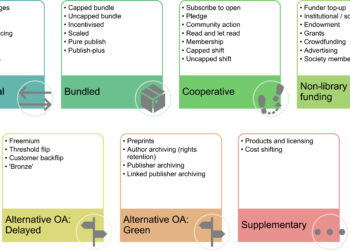
Given Springer’s investment in Open Access, author pays experiments have not panned out the way they expected. Rubinstein doesn’t believe there is enough flexibility in library budgets to sufficiently support author payments. He outlined a few other experimental models of access, cautious not to advocate one option over another. Springer’s approach is clearly experimental, throwing lots of options against the wall and “seeing which one’s stick.”
Matt Hudson, Managing Editor of publications of the Geological Society of America described their token access model, selling an institution a fixed number of article downloads for a fixed number of dollars. While librarians like to be able to predict their budget for the next year, they are not fond of running out of tokens mid-year, or knowing that the same article may be downloaded several times by the same individual. Yet, the token access model has provided access to small institutions who have traditionally not subscribed to GSA journals.
Vida Damijonaitis, director of Worldwide Sales at the American Medical Association described their journal backfiles program. Providing backfiles for AMA journals, completely integrated with their current online content, has created revenue for her association while allowing librarians to rid their shelves of old print issues.
“If your journal is print-only, its dead,” declared Grace Baysinger, librarian at Stanford University. Presenting a long list of experiences and advice, Baysinger was not excited about patron-initiated collection purchasing. Having user-driven collection creates an uneven and erratic collection, she concluded. Baysinger reported that many user requests were for content the library already owns. This experience was echoed by Nancy Gibbs, librarian at Duke University. Her talk, “Don’t let the Pigeon drive the bus, or, Don’t let the patrons buy the books,” was presented by Mark Johnson.
Publishers should have multiple options for libraries, Baysinger concluded. Having a “Chinese menu of options” for customers is key. Her general advice to publishers: Conveying the value of publishing to authors.
![Reblog this post [with Zemanta]](http://img.zemanta.com/reblog_e.png?x-id=18ea2f97-c2db-498a-8336-5f7bd55697da)