I have just been introduced to the word flong. Hands up if you love it already, and be prepared for further flong felicity.
A flong is a papier-maché mold from which a metal printing plate is produced. It was the genius invention that enabled large-scale printing at speed.
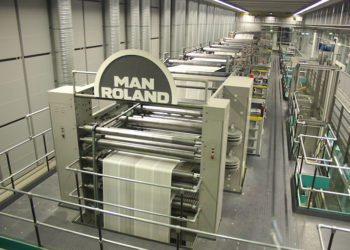
Before flongs, there was flat-bed printing. Think Gutenberg — pressing a flat surface of type against a flat sheet of paper. The invention of movable type had gone a long way to speeding up printing processes (i.e., you no longer had to carve each page into a wooden block and could instead assemble ‘formes’, page arrangements of type, illustrations, etc., locked into a frame for inking and printing.) But on the flat bed press that was still a sloooow process: one sheet at a time, up-and-down, clunk, clunk. So then came the invention of the rotary press, which instead used curved plates wrapped around a cylinder. Instead of pressing a single piece of paper against your forme, one at a time, you wrapped the forme around a cylinder and rolled paper past it, transferring continuous images, and printing thousands of pages an hour.
Except formes were too fragile to be wrapped around cylinders. So they were replaced by curved metal plates. But how do you convert your forme to a curved metal plate? Of course! A flong!
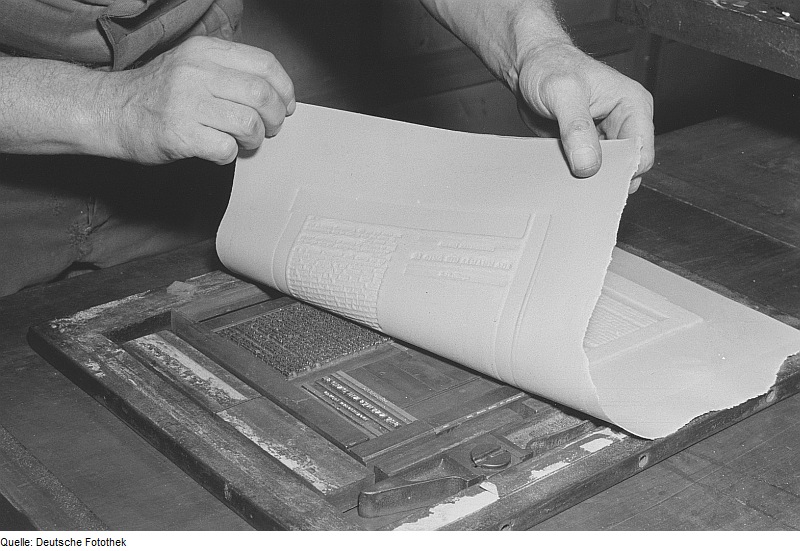
Printers would press layers of damp paper and paste it onto the composed type to make a papier-mâché mold (the flong). That mold could then be curved, dried, and used to cast a durable metal plate. This plate was light, strong, and perfectly suited for high-speed rotary printing. And when the metal plate gets worn down from making thousands of impressions, your flong is ready and waiting for you to make a new cast without having to go through the time, trouble, and expense of resetting everything again.
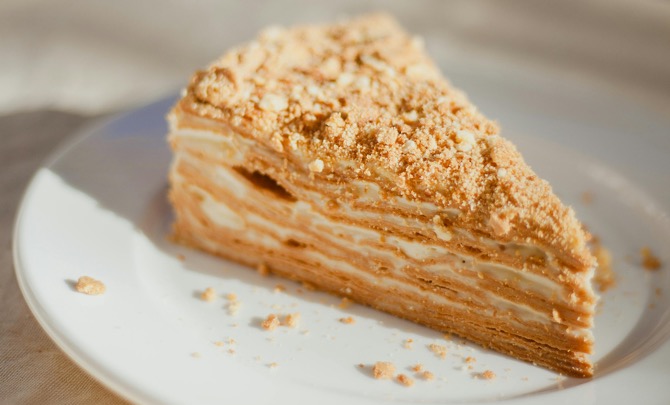
The flong was a genuine revolution (har, har, pun intended) for printers and publishers in the 19th century. It allowed newspapers and books to be produced more quickly, more cheaply, and in greater numbers. It has been key to the democratization of knowledge. But beyond all that, possibly my favorite thing about the flong is its etymology. It is an English phonetic form of the French word flan, because the printer who invented it liked a cake known as a flan, which was built up from layers of pastry — in the same way that a flong is built up from layers of paper. And that is how printing was revolutionized by cake. Sort of.
Enjoy this short video of Frank Romano, President of the Museum of Printing, explaining what flongs are, showing some examples, and suggesting that the most revolutionary thing since has been the PDF — and discuss below!

Discussion
1 Thought on "How Printing Was Revolutionized By Cake. Sort Of."

For over an HOUR of flong nerds chatting, see here: