Editor’s note: Today’s post was written by Anna Jester, Chyanne Turner, Jude Perera, Dana Compton, Simon Holt. Anna is a Senior Manager with Partner Success at Wiley. Chyanne is a Digital Publishing Associate with the American Association for Cancer Research. Jude is Associate Director of Global Engagement at Wiley. Dana is Managing Director & Publisher at the American Society of Civil Engineers. And Simon is Senior Head of Content Accessibility at Elsevier.
A big part of what makes the Annual Meeting for the Society for Scholarly Publishing (SSP) so special is the opportunity to have frank conversations as a community about who we are, how we got here, what’s next, and who we want to be as a community — both as people and as professionals. As a collective, we have long talked about the new reality of working in a primarily virtual environment rather than a physical one. While the flexibility of online work is great, one of the undoubted downsides is that it can feel more difficult to really get to know our colleagues as human beings.
When Jude and Anna first discussed this session, the title was a playful nod to reality TV franchises like The Real Housewives, which promised “real talk” but delivered it through conflict and drama. In contrast, our session was designed to offer that same unfiltered honesty without the conflict — people simply sharing their genuine stories.
All too often we see a “2D” version of one another, via an email or on a screen, and it’s easy to fall into a transactional connection and forget about the human connection that binds us all together. This can make some topics that are hard to talk about at work — feelings around grief, discrimination, exclusion, or isolation, for example — even more difficult to raise, as the psychological safety needed to be vulnerable can be even harder to find in a virtual workplace.

At this year’s conference, we tried to address that balance a bit by dedicating a session to those frank conversations, those hard-to-reach topics, those uncomfortable situations. We did so not because our stories are so different from everybody else’s, but because we wanted to normalize conversations like this and, by doing so, hopefully make everyone in our industry feel less isolated. Below, the panelists share their reflections on the session and what they took away.
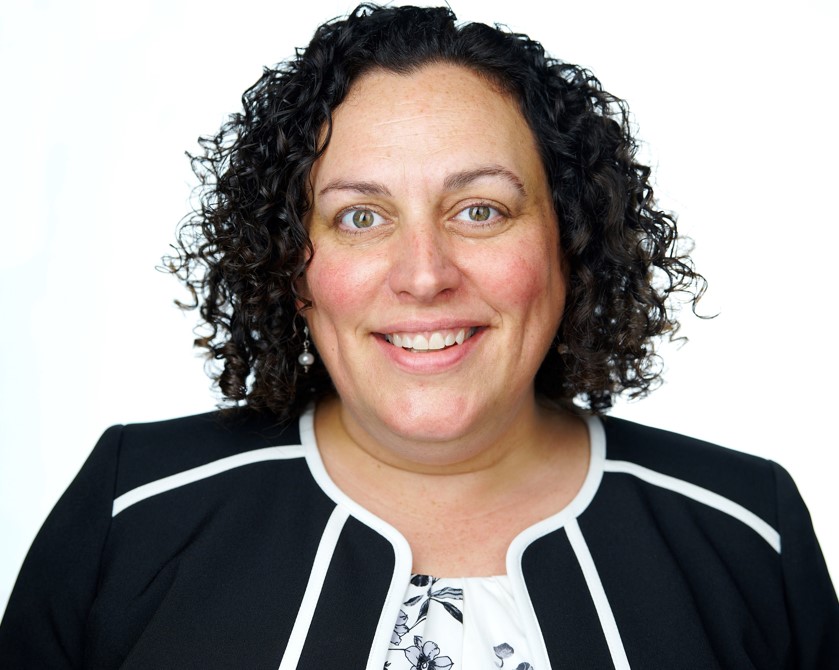
Anna Jester
I’ve repeatedly weighed which topic from our conversation should be recreated in a blog-style summary. My experiences working at a company during and after an acquisition, and mergers, acquisitions, and reorganization in scholarly publishing generally, are all topics that warrant a full post of their own. However, I felt vindicated about the value of our session after boarding a plane to return home from Chula Vista, when someone I don’t know particularly well thanked me for sharing this story during the session in response to the prompt, “Share a tough or slightly ridiculous moment in your career that stuck with you.”
Believe it or not, within this decade (the 2020s), I joined a meeting and soon heard the person running the meeting apologize for wearing their hair curly that day. They noted they’d been told curly hair is unprofessional. As a person who embraces my curls, owns a surprising number of suits, and has enjoyed a career spanning decades, I almost fell out of my chair. Even worse, I was shocked into silence (which, if you know me, is hard to imagine). Not being able to speak up in that moment and respond in a meaningful way sticks with me to this day.
Most of us are going to encounter situations in our professional lives, possibly including while volunteering, that are uncomfortable (or worse). While we may not as readily control our physiological responses in the moment, we do get to choose how, if, and when we respond. One of my responses has been to foster dialogue so that others are reminded that their experiences are not grounds for isolation.
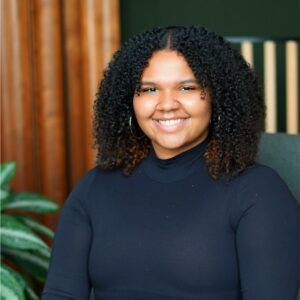
Chyanne Turner
I was incredibly humbled to be invited by Anna and Jude to participate in this session. It was my first time attending SSP’s Annual Meeting, and I was (and still am) in my first year of working in scholarly publishing. Naturally, a session like this was intimidating to navigate as an early-career professional, but the support I received from meeting attendees and my fellow panelists truly made the experience worthwhile. I was also moved by my fellow panelists’ commentaries and was grateful for the chance to connect with them through this session.
During the session, I had the opportunity to speak about how I strive to represent myself authentically in the workplace. During my undergraduate studies, I worked at a writing center focused on challenging standard writing conventions and understanding how they reinforce biases in academic writing. Once I expanded this thinking beyond communication, I realized that many professional practices and standards also implicitly exclude self-expression from marginalized communities. This thinking led to my current values on how I represent myself in the workplace, and I made it a goal to refrain from silencing my identities through my style, communication, and self-expression in the workplace. I was truly grateful for the opportunity to share my perspectives on representation at work, and was even more glad that these sentiments were appreciated and echoed by many of the session attendees.
Jude Perera
When Anna and I first began shaping this session, it came from a shared desire to create something that went beyond the usual professional discourse and instead reflected the lived realities behind our roles in scholarly publishing. For me, this was deeply personal. My own experiences navigating grief alongside the demands of a professional career had already opened up conversations with colleagues who, upon learning my story, shared their own. Those moments made it clear how much remains unspoken in our industry and how necessary it is to create spaces where people can bring their full experiences into the conversation.
This session was also rooted in the recognition that we all come to this work from different perspectives shaped by our individual lives and circumstances. These differences influence how we experience our careers, how we navigate challenges, and how we relate to one another. Creating space for these voices to come together was an essential part of what we hoped to achieve, not by categorizing experiences but by acknowledging that they exist and matter.
What unfolded during the session exceeded anything I had anticipated. The discussion was raw, honest, and deeply human, shaped not only by the openness of the panelists but also by the willingness of the audience to share their own truths.
What stayed with me most is the reminder that while each of our journeys is different, none of us is alone in navigating them. In an industry that increasingly operates across digital and transactional spaces, creating room for authenticity is essential. Conversations about grief, identity, and the ways our personal and professional lives intersect are not separate from our work. They are part of what shapes how we show up and how we support one another.
Dana Compton
I was overjoyed when Anna invited me to participate in this session, not only because she said I didn’t have to create any slides, but also because candid discussions about our experiences in this industry are a favorite panel format for me. I looked forward to this session in the run-up to the SSP conference, and I haven’t stopped thinking about it in the months since.
My blurb for this post is not actually about the panel itself, however. It’s about the hotel bar after the EPIC Awards event. I had the good fortune to join a wonderful group of colleagues at an outdoor table for a many-hours-long discussion related to some of what we discussed during the session as well as other similar topics. I knew some of these folks before the session, but several I only met either immediately after the panel or at the bar itself. The conversation was cathartic, often moving, and hilarious in a way I will never forget.
This is why we need panels like this — conferences are NOT only about honing our professional and technical knowledge, and they shouldn’t be. Building human relationships is essential from both a personal and professional perspective — a privilege that is harder and harder to come by in an increasingly virtual and automated world. Thank you to my fellow panelists, all of the session attendees, and of course my colleagues who stayed up too late at the bar with me!
Simon Holt
In my 20-ish years working in scholarly publishing, I’ve seen a lot of changes (haven’t we all!). Two of the major ones are: 1) it’s more OK than it used to be to talk about your lived experience as a person, and 2) conversely, due to virtual workspaces in global organizations, interactions between colleagues are at risk of becoming more transactional as, subconsciously, human relationships may be reduced to simply a name and an email address on a screen. At its worst, this potentially renders individuals interchangeable and negates the differing perspectives that make us all valued professionals and people. Panels such as this one are critical in reminding us that our strength as a community is in those differing perspectives, experiences, and backgrounds. SSP is, at its best, a forum for the exchange of ideas, and it’s critical that everybody feels able to express who they are freely.
Like approximately 15% of the world’s working-age population, I have a disability. In my case, I’m visually impaired, and today, 75% of people like me of working age are unemployed both in the US and UK. This depressing statistic has not changed since I started working in the 2000s. When I started my career, I felt isolated, assuming that there was nobody else in my position, facing the same challenges as me, in our industry. In my early years, I found it hard to find my place professionally, and felt defined by what I couldn’t do rather than by what I could.
Eventually, I was lucky to find some individuals who saw past that and believed in me professionally. As I have become more confident, I have tried to use my platform to normalize conversations about disability in our industry, to help create a more psychologically safe and inclusive environment for all. The reason I think this is important is that if people feel comfortable sharing who they are, they will also feel comfortable sharing their ideas about products, content, and workflows.
Our industry is one of ideas — sharing them, debating them, and refining them together as a community. To do this effectively, we need the best brains, and for those brains to perform at their best, they need to feel comfortable. Panels like this are vital in creating that environment, which allows us all to contribute our best. These conversations help us all to learn and make for a richer conversation and community as a result. The fact that SSP facilitates these conversations is why I’m so proud to be a member.
Conclusion
This session reinforced that community in scholarly publishing is not only built through shared work but through shared understanding. Creating space for honest conversations allows us to show up more fully as colleagues and as people. As our industry continues to evolve, maintaining that human connection will remain essential. I hope this is one of many conversations that continue to bring these perspectives together.
Authors’ note: Some contributors to this post used AI (Claude) to summarize the transcript of the SSP panel conversation as a point of reference for writing this post.


Discussion
1 Thought on "Guest Post — Not the Real Housewives of Scholarly Publishing"

This was such a great session to listen to in the SSP Annual Meeting on-demand library (https://ondemand.sspnet.org/video/not-the-housewives-of-scholarly-publishing/81516228-238d-4852-8f92-2cc0bde11b37). I was unable to attend this panel in Chula Vista but I definitely wanted to hear it. I’m pretty pragmatic in my work persona but there’s no denying that who we are as people informs our work. It’s refreshing that SSP offers a space to share these stories. Thanks so much to all of you for the open panel discussion. It meant a lot to so many.