Editor’s Note: Today’s post is by Rachel Martin. Rachel is the Global Director of Sustainability at Elsevier, where she is driving transformational change in the priority areas of sustainability and SDGs, with a focus on climate action.
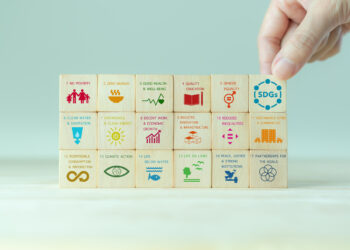
The framework of the United Nations’ 17 Sustainable Development Goals (SDGs) has, over the past decade, generated a tremendous amount of global cooperation, innovation, and support to drive transformative change within our communities. This might be attributed to the global nature of the challenges, as the SDG framework sets out to address universal issues from climate change and renewable energy to protecting our oceans and ensuring good health and well-being in our communities. While the publishing industry has been very supportive of the SDG agenda (with the launch of the SDG Publishers Compact and IPA SDG Dashboard), it can be hard to relate the specific SDG targets and measurements to what we, as academic publishers, can truly influence.
Trusted knowledge is at the heart of the solutions needed to advance the SDGs. STM, alongside their academic publishing members, were among the first to adopt the SDG Publishers Compact. Making a commitment to prioritize SDGs both within their own organizations, through responsible business practices, and through the content that is published. This was a unique approach, creating a momentum within the industry that has seen the SDGs become a focal point of industry events, various industry committees, and working groups, including a dedicated committee within STM.

To support this publishing industry action, STM launched a SDG roadmap back in 2023. The idea was to provide a practical, accessible first step to get academic publishers ready to sign up to the SDG Publishers Compact’s 10 commitments and to inspire further action in support of the SDG agenda. The roadmap provided resources, links, and inspiration for all publishers, both big and small to take concrete actions. To provide further support, STM launched level 2, designed for those publishers who had signed up to the Compact and wanted to deepen their integration of the SDGs into their organization. This level provided resources for community mobilization and implementing systematic changes, such as engaging with editors, suppliers, and benchmarking and tracking progress. Both levels have since become useful tools for sustainability leads, editors, and even outside of our industry as a source of practical inspiration and guidance.
Yet, most of the Level 1 and 2 SDG-related actions by academic publishers focus on the broad, high-level goals — such as reducing inequalities or taking climate action — rather than the 169 specific and measurable targets that underpin the SDG framework. These targets, which the UN actively tracks, offer a much more detailed global cross-sector roadmap for progress. It’s often unclear how, or even if, academic publishers are contributing to movement on these specific indicators. Which targets can publishers realistically influence — and are we genuinely making progress? That was the question we asked at STM in our expert working group. Comprised of sustainability leads from across the STM membership, we challenged ourselves to think of concrete examples where we moved a specific SDG target. The result – our Level 3 Roadmap – has just been launched.
Let’s get specific. On the surface, SDG 4 seems very relevant for academic publishing — quality education. Much of what we do is about facilitating trusted information through peer review, research integrity, and dissemination. But how does that relate to the SDG targets? Specifically, target 4.7 is about education for Sustainable Development and Global Citizenship. The aim of this target is to ensure all learners acquire the knowledge and skills needed to promote sustainable development, which covers economic growth, social equity, and environmental protection. We found there are great examples of where our industry has done just that. We only must think of the amazing efforts that were put in place during COVID-19 by the publishing industry that accelerated knowledge exchange in support of a rapid global response to the pandemic. The cooperation serves as a great blueprint for future responses to such global challenges.
This leads to the second specific SDG target where our industry can drive progress. As we know, great science deserves to be published, but great science must reflect the depth and breadth of the human experience. As our understanding of the world evolves, knowledge helps us understand how science, research, and innovation impact different people, cultures, and societies. SDG Target 10 is about reducing inequalities, specifically 10.2 is about empowering and promoting inclusivity. For this target, advocating for inclusive science is important, and this is what academic publishers are doing. Think about people with visual disabilities, they too should be able to access scientific research. Academic publishers have been incredibly proactive in ensuring that platforms, books, and journals are accessible to everyone.
This leads us to the final specific SDG target, SDG 17, partnerships for the goals. As mentioned, the goals articulate global challenges that require our industry to work together to share knowledge, expertise, and tools. Target 17.6 is about enhancing global partnerships. Here, we see many trade associations and industry organizations creating valuable platforms to continue to discuss and advocate for sustainable development. At STM, our very own Social Responsibility Committee, formed in 2023, s strategically driving key projects that bring together the diverse expertise we have in our industry to enhance how STM can best serve its members and create tools and resource centres such as the SDG roadmap. Partnerships are essential to driving meaningful action for sustainable development across scholarly publishing. Through collaboration, we can accelerate progress toward a sustainable future for both our organizations and the communities we serve
The STM Roadmap has helped to guide academic publishing efforts, and as we reach level 3 – the final level – our hope is that we can continue to gather case studies and real-world examples that show how publishers are aligning their operations and content with the SDG agenda. These contributions not only demonstrate leadership within our own networks, but also feed into the broader 1000 Actions campaign — an industry-wide initiative by the International Publishers Association and the United Nations Publications showcasing how publishers are collectively supporting and advancing the SDGs. In a time when staying on course for sustainability has never been more important — particularly in addressing climate change — this shared commitment is vital.
Level 3 is a call to action. It reminds us that academic publishers have both the responsibility and the opportunity to be catalysts for change. Through our policies, focus, and sustained action, we can help shape a more hopeful and resilient future.
Let’s stay committed, work together, and continue to turn intent into tangible impact.
Discussion
2 Thoughts on "Guest Post — Protecting Progress: The Case for Staying Committed to Sustainability in 2025"

Thanks so much for this important contribution and call to action. As you suggest, it is important to focus on the specific and measurable targets of the SDG Goals, and in this regard the Level 3 roadmap is an excellent additional resource.

Thanks for this thoughtful piece, Rachel. As a library assistant, I see how access to reliable research supports real-world progress on the SDGs. Your call to focus on specific targets rather than broad themes is spot on. The STM roadmap’s practical approach is especially encouraging—it’s great to see publishing positioned as a driver of sustainable change.