A couple of years ago, I wrote a piece here in the Scholarly Kitchen that posed a question: “Is the essence of a journal portable?”.
What gave rise to that question was a spate of shake-ups at some major scientific journals. Some editors had been fired, some editorial boards had departed en masse. The particular situation that had really caught my attention was the wholesale defection of the editorial board from an Elsevier journal called NeuroImage. Upon leaving that journal, the board declared its intention to create a new, competing journal that would (in the words of one news report) “eclipse NeuroImage in standing… the fact that the entire editorial staff is making the shift will ensure the new journal’s quality.”
True to its word, the erstwhile NeuroImage board then founded Imaging NeuroScience, which it now publishes with MIT Press.
The question that occurred to me, and on which I mused in my Kitchen post, was whether potential authors would see the board as the essence of the journal, regard Imaging NeuroScience as the “new” and “real” NeuroImage, and shift their submission behavior accordingly. If the neuroscience author community sees the board as the defining feature of the journal, then that community would likely follow the editorial board from the old journal to the new one; but if, on the other hand, the author community sees the journal’s identity as being essentially independent from the specific makeup of its editorial board, then the departure of NeuroImage’s board might have little effect on the journal.
Multiple possible scenarios were possible, including:
- Having lost its editorial board and replaced it with a new one, NeuroImage could wither and die, its market of potential authors seeing it as fatally damaged.
- NeuroImage might continue to thrive, being seen by its audience as still essentially the same journal it had been with the previous board.
- Imaging NeuroScience might succeed, even as NeuroImage also continues to succeed, authors seeing both of them as at least reasonable (maybe even equally desirable) venues in which to publish.
- Imaging NeuroScience might fail.
Two and a half years later, where are we? I decided to pose five questions to both Andrew Davis (VP for Global Communications at Elsevier) and Nick Lindsay (Director of Journals and Institutional Partnerships at MIT Press). I’ll summarize the responses I received, and then offer some brief observations on those responses.
Question 1: Have submissions to your journal met expectations during the past 18 months? If not, how close have they gotten?
For NeuroImage, Davis reported an initial drop in submissions following the editorial board’s departure, but said that since that time, submissions have “returned to pre-transition levels.” Before the transition, submissions were hovering between 2,400 and 3,000 per year, and they are now back at that level and “continuing to grow.” Davis characterized this level as “broadly in line with expectations.”
Lindsay reported significantly lower submission levels for Imaging Neuroscience, but characterized them as “ahead of expectations” – which seems reasonable given how new the journal is. MIT Press had planned on 525 submissions in 2024 (the journal’s first full year of publication) and 750 in 2025, but actually received 878 and 865, respectively.
Question 2: Has your journal’s publication output met your expectations during the past 18 months? If not, how close has it gotten?
For Imaging Neuroscience, Lindsay reports that it published 52 articles during its first year of publication in 2023 (a publishing year that began in August), then 353 articles in 2024 and 444 in 2025. This far exceeds their expectations; Lindsay says that their “initial optimistic projections had us publishing 200 articles in 2024 and 300 in 2025.”
Davis reports that NeuroImage had publication output “somewhat below historic levels during (the) period (immediately after the board’s departure), largely due to reduced capacity while recruiting and embedding the new editorial leadership team.” They anticipated, and saw, a roughly 20% decrease in publication volume in 2024 as compared to 2023 – but he reports that 2025 publication levels were 10% higher than what the journal saw prior to the editorial board’s departure, and that output continues to grow.
Question 3: What impact or citation metrics do you use to measure the success of your journal? Is it meeting your expectations on these measures?
According to Davis, NeuroImage relies on “citation-based metrics like CiteScore to assess journal performance over time,” and he reports that on this basis, NeuroImage’s performance “remains broadly comparable with pre-transition levels. The 2024 CiteScore is 10.8, with a 2021 CiteScore of 11.2.”
Imaging Neuroscience is still new enough that it does not yet have an impact factor (IF), and its h-index has not yet had time to mature. However, according to a couple of less-formal metrics, Lindsay reports very satisfying performance: “from 2023-2025, 22 of the top 200 MIT Press articles based on number of citations (data from Dimensions) were published in Imaging Neuroscience.” He also noted that when it comes to “the average citation per published paper as a function of publication year… Imaging Neuroscience (is already) ahead of… NeuroImage and Brain Mapping” for 2024 and 2025.
(Scholarly Kitchen readers may remember a study published here 13 years ago by Todd Carpenter, in which he found that IFs tend not only to be resilient for journals that have experienced editorial mutinies, but also that the resulting new journals tend to do fine in that regard.)
Question 4: (For NeuroImage) What was NeuroImage’s rejection rate prior to the departure of its editorial board, and what is its rejection rate now? (For Imaging Neuroscience): What is the rejection rate for your journal, and is it increasing, decreasing, or remaining the same?
Lindsay said that during its first two full years of publication, Imaging Neuroscience maintained a steady rejection rate of 67%.
Davis shared specific rejection data off the record, but was willing to share publicly that NeuroImage’s rejection rate has remained effectively unchanged since its board’s departure.
Question 5: What else would you like our readers to know about how your journal is performing?
Davis shared that NeuroImage has “seen meaningful changes in the composition of the journal’s author community… with a higher proportion (of submissions) now coming from Asia – 65% in 2025 compared to 26% in 2022. This likely reflects a combination of strong growth in the Asian research market, the increasing use of more cost-effective imaging modalities, and an expansion of NeuroImage’s scope, which has enabled a more diverse authorship community than in the past.”
Lindsay and his team are feeling bullish about Imaging Neuroscience, finding that the answer to the question “would the neuroimaging community be willing to follow the editorial team and board to a new title that didn’t have the publishing legacy, brand, or citation metrics” of an established journal has clearly turned out to be “a pretty resounding yes.” He points out that “in under 2.5 years, (Imaging Neuroscience has become) the #2 journal in the field in terms of article output and is now gaining citations at a rate better than that of journals that have been established for decades,” and that the journal’s robust growth has enabled MIT Press to lower its article-processing charge from $1,600 to $1,400.
Comments and Observations
For me, this has been a fascinating exercise, one that leads to several reflections:
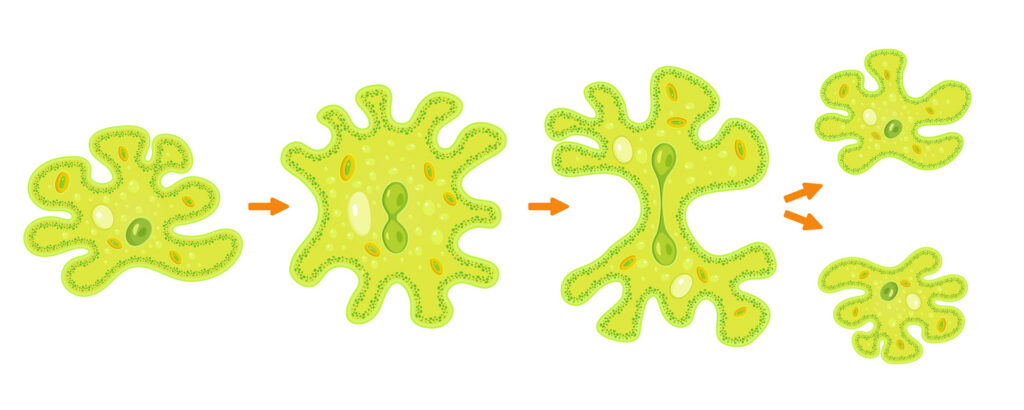
My original question – is the essence of a journal portable? – remains unanswered, and may in fact be unanswerable. The neuroscience research community has obviously welcomed Imaging Neuroscience; however, it does not seem to have abandoned or penalized NeuroImaging. Rather than the “essence” of the original journal departing with its editorial board and taking up residence at another publisher, in the case of NeuroImaging the journal seems instead to have reproduced by fission – splitting, like a planarian, into two new and independent journals, both of which are thriving.
This could suggest that the makeup of the original editorial board was of little importance to the author community, and that NeuroImage’s reputation was not seriously harmed, or its status as a desirable publishing venue reduced, by the board’s departure. However, it doesn’t necessarily mean this. It may be that the original author community has migrated disproportionately to Imaging Neuroscience, and that the slack is being taken up by a somewhat different community (significantly from Asia) such that NeuroImage continues to do well simply because there has been either a growing need for publishing venues, or because there was a large unmet need prior to the establishment of Imaging Neuroscience – a need now being better met by the expanded number of journals. If this is the case, then NeuroImaging may have suffered a reputational hit and yet still be receiving all the high-quality submissions it needs to continue thriving.
One check on this theory is NeuroImaging’s citation performance. If its reputation had been significantly harmed by the board departure, and/or if it is now publishing lower-quality science, we should expect to see lower citations. But by that metric, NeuroImage seems to have suffered little if at all so far, with a CiteScore effectively unchanged since before the transition.
Of course, Davis’ observation about NeuroImage‘s “expansion of… scope” is intriguing. If the journal had not expanded its scope in the wake of its board’s departure, how would it be performing now? There’s no real way of knowing.
But the bottom line seems to be that there have been no real losers as a result of this split. Both journals are doing well, and the neuroscience community now has significantly more opportunity to publish high-quality work. Imaging Neuroscience hasn’t “eclipsed” NeuroImage, but it is certainly off to a good start as a solid competitor.

Discussion
10 Thoughts on "So… IS the Essence of a Journal Portable? Checking in on _NeuroImage_ and _Imaging Neuroscience_"

According to the data found in OpenAlex the origin of the articles in NeuroImage has shifted drastically from the USA to China in the recent years, at the same time Imaging Neuroscience is dominated by articles from the USA:
Number of articles in NeuroImage (China/USA)
2022: 768 (15%/47%)
2023: 581 (18%/43%)
2024: 461 (42%/27%)
2025: 671 (34%/29%)
2026*: 110 (47%/17%)
The majority of articles in NeuroImage were from China (and this is in line with the suggested 65% submissions from Asia). At the same the time majority of articles in Imaging Neuroscience are from the USA, and the share of articles from China is not more than 5%:
Number of articles in Imaging Neuroscience (China/USA)
2023: 66 (3%/41%)
2024: 359 (4%/54%)
2025: 446 (5%/51%)
2026*: 44 (5%/50%)
*in February 2026
It will be interesting to see what effect this shift can have in the future in citations/impact and if the “migration” will continue or stabilize.
Sources:
I filtered the OpenAlex results for articles and reviews and double checked the annual numbers with the numbers which could be find at the journal homepages (and they seem to be reasonable)
Journal data:
NeuroImage: https://www.sciencedirect.com/search?date=2022-2026&pub=NeuroImage&articleTypes=REV%2CFLA&lastSelectedFacet=publicationTitles&publicationTitles=272508
Imaging Neuroscience: https://direct.mit.edu/imag/issue
OpenAlex links:
Imaging Neuroscience: https://openalex.org/works?page=1&filter=publication_year:2022-2026,type:article|review,primary_location.source.id:s4387291234&group_by=publication_year,open_access.is_oa,primary_topic.id,authorships.institutions.lineage,type,authorships.countries
NeuroImage: https://openalex.org/works?page=1&filter=publication_year:2022-2026,type:article|review,primary_location.source.id:s103225281&group_by=publication_year,open_access.is_oa,primary_topic.id,authorships.institutions.lineage,type,authorships.countries

Rick, thanks very much for taking the time to revisit this issue of journal essence portability. I did want to briefly point out a couple of things.
Imaging Neuroscience has been accepted into the Emerging Sources Citation Index and will receive an impact factor this year. We’re unsure exactly what this will mean for submissions but we’re expecting a jump starting in the fall.
I’m not a citation metrics guru, but I think using CiteScore as an indication of consistent citation performance in this case is problematic. The 2024 CiteScore for NeuroImage would be based on articles that were published from 2021-2024, the majority of which were acquired under the previous editorial team. Anything from Jan 1, 2021-April 2023 would have been their responsibility. We may need a couple more years for the CiteScore to be fully reflective of the new editorial team at Neuroimage and for Imaging Neuroscience to get enough publication time to have an accurate h-index as well. Perhaps that’s a reason to revisit this again in 2028.

Thanks for this work Rick, it is a really interesting question to ponder, and relevant as we see an increase in this type of defection. Looking at the responses, NeuroImage has returned to previous number of *submissions*, but didn’t give numbers for their publication output and how they compare to earlier years. Gabor’s numbers (if correct) seem to indicate that the USA submissions seem to have moved across to the new journal. So a secondary question to your initial pondering is what we consider the ‘essence’ of a journal to be? Is it the authors who traditionally publish in it? What this analysis seems to indicate is some space has opened up in this area for a wider international pool of authors to be published in this field. That’s a good outcome.

Hi, Danny —
In my original post, I asked that same question: “what is the essence of a journal?”. What I wondered, more specifically, was whether the defecting editorial board were correct in their apparent belief that by leaving NeuroImage, they were essentially taking the journal with them — that they themselves, as a board, effectively constituted the essence of the journal. It seemed to me that the subsequent behavior of NeuroImage’s author community would effectively answer that question with their submission behavior.
I think you’re right that the ultimate outcome of their defection has turned out to be a good one. More bandwidth for high-quality publishing in neuroscience, more good science being published, more space for a broader authorship.

A really interesting case study, thanks. A few things I’ve found interesting using the wayback machine to compare the journal pages pre- and post-exodus.
NeuroImage’s Impact Factor has fallen from 7.4 (in 2023 before the editorial board departure) to 4.5. But the fact that it has an IF at all will have continued to drive those submission numbers.
Comparing the scope expansion, the change from “important advances” to “important developments” is an indicator of being more inclusive and methodologically broad – or less selective. Which may tally with the IF change. It’d be interesting to see how many Imaging Neuroscience articles are cited by NeuroImage articles, and vice versa…
If, as the analysis above suggests, the bulk of the community moved with the editorial board – and their level of selectivity has remained consisted – we might expect a similar IF for Imaging Neuroscience later this year to NeuroImage’s before the editorial board’s resignation. That, coupled with Imaging Neuroscience’s APC being $2000 less than NeuroImage, might see a significant surge of submissions to Imaging Neuroscience away from NeuroImage.
Perhaps most interesting is the question of what motivates an author’s submission decision in different geographies and career stages. The authors publishing in Imaging Neuroscience over the last couple of years are clearly not driven by IF. This may be because they are more motivated to publish where “their community” publishes (impact by association) combined with being at a position in their career where IF of where they publish is of little relevance. It’s unlikely those authors chose Imaging Neuroscience because of the lower cost.
So what might happen next? Is a possible outcome that Imaging Neuroscience sees that surge of submissions whilst maintaining its selectivity, leading to a higher rejection rate, a higher journal cost and eventually a higher APC? Will submissions in that surge still end up in NeuroImage, having wasted time and reviewer energy being rejected from Imaging Neuroscience?
It will definitely be interesting to revisit this in a couple of years time.

I don’t expect NeuroImage to publish truly foundational papers anymore, say on the scale of Friston’s earlier contributions. The journal’s focus has clearly shifted, and it now feels closer to the space occupied by other broad, albeit high-visibility, neuroscience outlets, instead of being a primary home for field-defining methodological work.

Missing is any discussion of the values of the publishers. Elsevier has been the subject of a robust campaign by many academics since at least 2011, one now aimed at their high and constantly increasing APCs, substantial compensation to the Reed Elsevier management [declared in the annual reports – have a look!] , and high cost deals offered to university library systems, many of whom have fought back by letting their agreements lapse, as my university library just did for a while. I am not aware of any such campaign against MIT Press.
I assume that the uptick in Chinese authors to NeuroImage and the decline in the % of Western authors may be due in part to the lack of participation by Chinese and other Asian academics in such scholarly protests and campaigns.
It’s true, my post doesn’t address the issue of publishers’ (or authors’, or libraries’) values. This is primarily because it’s virtually impossible to conduct such a discussion in any kind of rigorous way; when an individual talks about publishers’ (or authors’, or libraries’) “values,” he or she is almost always talking about the degree to which the behavior of those entities does or does not conform to that individual’s personal values, which are implied to be universal. Secondarily, it’s because virtually every player in the scholarly communication ecosystem operates from a multiplicity of values, many of which are to some degree in tension with each other. Invoking “values” can make for stirring rhetoric, but not often for useful analytical discussion.
I don’t agree, since the Cost of Knowledge campaign established a clear set of values about Elsevier’s corporate model and thousands of people [over 21k] signed up to a whole or partial boycott based on the 3 indicated transgressions of ethical values. And pressure on the company has been unrelenting ever since with other campaigns. http://thecostofknowledge.com/ So values were not individually determined, there was an actual social movement with consensus, ‘mechanical solidarity’ in Durkheim’s terms.

A small observation/ponderment – perhaps the authors who have moved journals to the new, non-IF rated title, are those who can afford to publish in new journals with little penalty for their careers? Which, historically, are those who have already established themselves within a field. Once the new IF is established for ImagingNeuroscience we may see a second wave of authors moving over… I look forward to the third edition of this discussion when that happens!