Editor’s note: Today’s post is by Chefs Maryam Sayab and Roohi Gosh, along with guest bloggers Gareth Dyke, Maria Machado, and Mingfang Lu. Gareth is a researcher, author, and scholarly communications consultant. Maria is a physiologist turned consultant, helping researchers publish their findings quickly. Mingfang is the Executive President of the Asian Council of Science Editors.
Peer review is under strain, not because the community lacks commitment, but because the system is being asked to do more than it has so far evolved to handle. This growing gap between demand and capacity is what sits at the heart of this year’s Peer Review Week theme. This year’s theme was selected through a global community poll, and the theme for Peer Review Week 2026 (14–18 September) is “Peer Review Capacity: Volume, Speed and Quality”.
A Community-Driven Outcome
“What we’re seeing across the community isn’t a single point of pressure, but a gradual shift in expectations. The volume has increased, timelines have tightened, but the way peer review is supported hasn’t evolved at the same pace. That gap is where the conversation on capacity begins.”
— Maryam Sayab, Co-Chair, Peer Review Week
This year’s theme emerged from a broad and diverse set of responses. The poll drew a record level of participation from across the scholarly ecosystem (see Figure 1), with the largest share of responses coming from researchers, followed by reviewers and editors. Representation from publishers, librarians, and other stakeholder groups further reflects the breadth of perspectives contributing to this year’s theme.
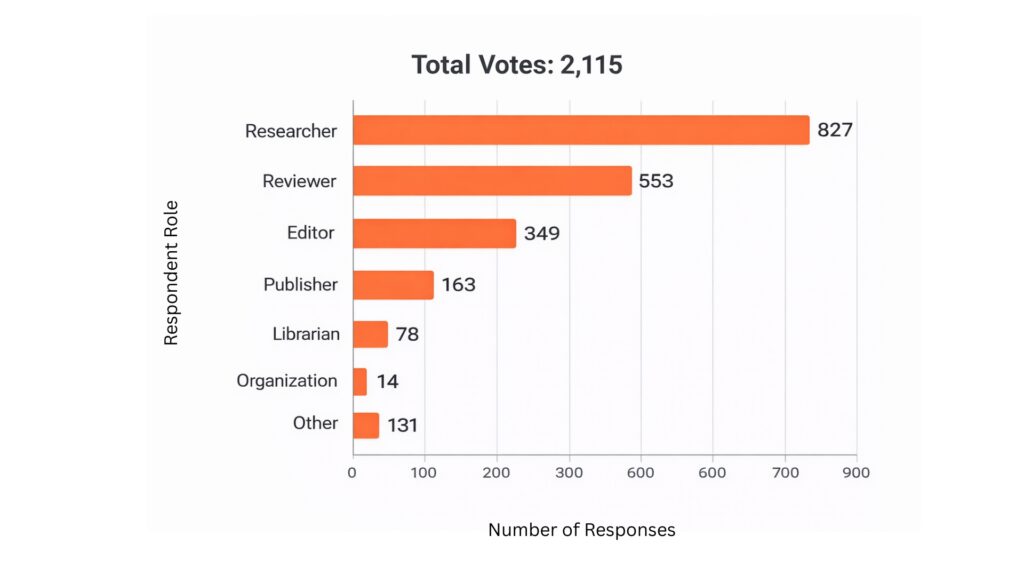
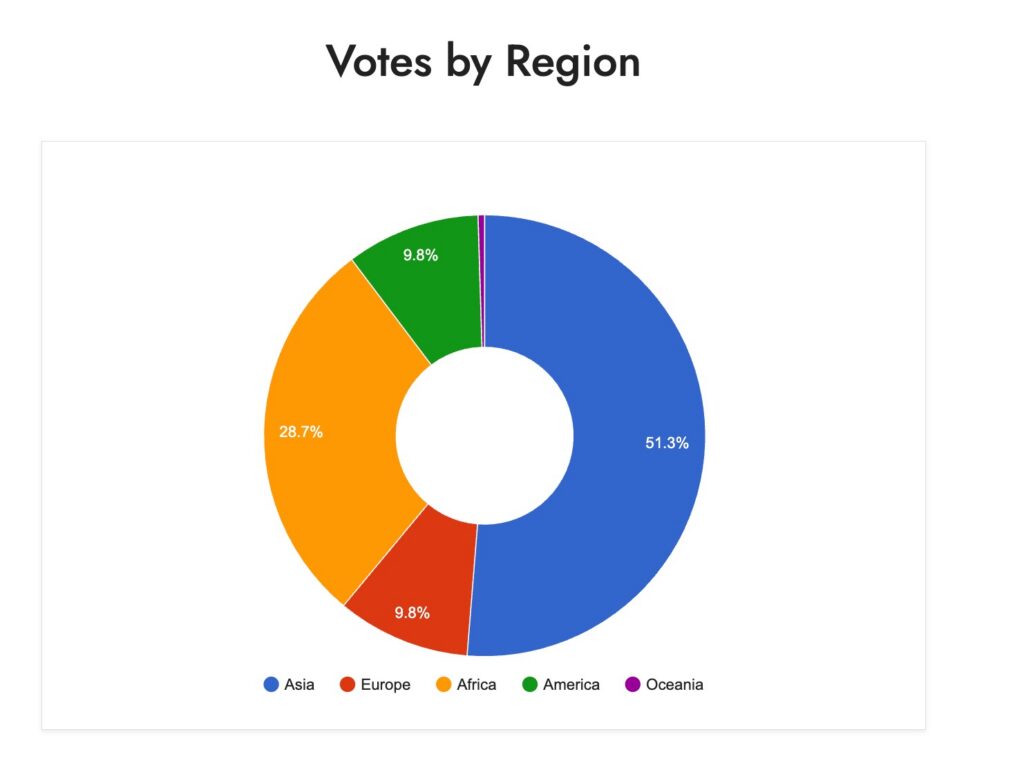
While these groups engage with peer review in different ways, the outcome points toward a shared concern. It reflects something that cuts across roles rather than sitting within any single part of the system.
The final result of the poll pointed towards a clear main concern, as the winning theme received 40% of the votes, while “Incentives and Metrics in Peer Review” was second, preferred by only 25% of respondents. The other themes included “Mentorship and New Models in Peer Review” with 21% of votes, and “Governance and Accountability in Peer Review,” which gathered 14% of votes. It seems the community has a strong interest in addressing questions around the scalability and sustainability of peer review systems.
Why Capacity, and Why Now?
In recent years, conversations around peer review have often focused on transformation, from artificial intelligence to questions of integrity and transparency. This year’s theme shifts the focus slightly. It brings attention back to something more structural, how much the system can realistically handle, and under what conditions.
Across journals, submission volumes continue to rise. At the same time, expectations around turnaround times have become more demanding. Editorial teams work within tighter timelines, and reviewers face increasing requests on their time. Yet, the underlying model has not expanded at the same pace. Peer review still depends heavily on a relatively small pool of contributors, many working voluntarily.
“As pressure increases, problems surface quietly with reviewer fatigue, editorial triaging, longer decision cycles, or shifting thresholds for acceptance. Capacity constraints are not always visible, but they are already shaping outcomes. I look forward to conversations this year on how the industry can collectively tackle these problems.”
— Roohi Ghosh, Co-Chair, Peer Review Week
Beyond Volume: Understanding Capacity
“As the volume of research continues to grow, maintaining the balance between speed and quality becomes increasingly complex. Capacity is not only about handling more submissions, but about ensuring that peer review continues to serve its core purpose, providing thoughtful, rigorous evaluation that the research community can trust.”
— Mingfang Lu, Co-Chair, Peer Review Week
In this context, capacity extends beyond the number of submissions.
- It touches on how editorial systems are structured, predicting where bottlenecks emerge.
- It reflects how reviewers are identified, supported, and — most importantly — retained.
- It raises questions about how speed and pressure to publish influence decision-making.
- It brings attention to the role of technology, including AI, in managing scale.
These challenges do not play out uniformly. Large publishers, smaller journals, and regionally focused publications often operate under very different constraints. What feels manageable in one context may not hold in another. Recognizing these differences becomes essential to having a meaningful conversation about capacity.
“As the hegemony of English in academic writing declines, and publications from the Global South become more and more impactful, are we beginning to see pockets of reviewers working solely for journals that are regionally relevant to them or publish in the language they are most comfortable with? Will this hinder the global exchange of knowledge and views that is key to peer review?”
— Maria Machado, Co-Chair, Peer Review Week
Questions for the Community
Peer Review Week 2026 will provide an opportunity to explore these issues more openly.
Some of the questions likely to shape the conversation include:
- How can peer review systems handle increasing submission volumes without compromising quality?
- What approaches can help balance speed with rigor in editorial decision-making?
- How can reviewers be better supported and recognized in an environment of growing demand?
- What role can technology realistically play in expanding capacity?
- How do capacity challenges differ across regions, disciplines, and publishing models?
These are questions many in the community are already working through, often independently. Peer Review Week creates a space to bring those experiences together.
A Community-Led Effort
Peer Review Week continues to grow through the contributions of a global community. Rather than a single event, it brings together diverse voices and perspectives from across the scholarly publishing ecosystem.
There are many ways to take part:
- Organize a panel, webinar, or discussion, whether virtual, hybrid, or in person
- Contribute a blog post, commentary, or case study aligned with this year’s theme
- Share perspectives and experiences on social media using #PeerReviewWeek and #PRW2026
- Engage colleagues and communities through training, dialogue, or collaborative activities
Whichever way you choose to participate, please submit your event or contribution through the PRW website, where you can also see the collections of events and activities from previous editions. Each contribution adds to a broader conversation on how peer review continues to evolve in practice, but the strength of Peer Review Week lies in this collective participation.
Looking Ahead to PRW 2026
This is a special 10th anniversary edition, and we are looking forward to seeing how the community has evolved in their thinking so far. Peer Review Week continues to be a community-led initiative, shaped by the contributions of organizations and individuals across the scholarly ecosystem. As in previous years, participation will take many forms, from discussions and webinars to articles, training sessions, and social media engagement.
“As we look ahead to the next 10-years of Peer Review Week, let’s find new and innovative ways to get more academic institutions and researchers involved. PRW remains primarily a scholarly industry-facing event; just the users, not the doers, of peer review”
— Gareth Dyke, Co-Chair, Peer Review Week
We are grateful to everyone who contributed to this year’s theme selection. The continued engagement from the community remains central to PRW’s direction and relevance. As we look ahead to September, we invite colleagues across the research and publishing landscape to engage with this year’s theme and contribute to the conversation.
The pressures surrounding peer review continue to grow. The more important question now centers on how the community responds, collectively and sustainably.