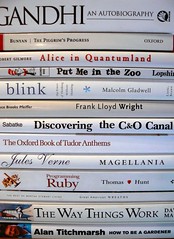
- Image by Vicki’s Pics via Flickr
As I’ve mentioned on this blog before, one of the reasons I wanted to self-publish my first mystery novel was to learn. And, boy, have I learned.
I’ve been learning a lot the last 72 hours about the Google Books Settlement. (Full disclosure — because my book was published in February 2009, it’s not subject to the settlement’s provisions.)
The gist of the settlement is that a class action suits by the Authors Guild is being settled in the following manner:
- The settlement applies to out-of-print works or “orphan works” (works where the copyright holder cannot be located).
- Authors and other rightsholders have until May 5, 2009, to opt in, opt out, or ignore the settlement.
- If you opt in, you will receive $60 per scanned book from Google, plus 63% of all advertising and e-commerce revenues.
- If you opt out, you don’t get scanned into the system, and you get 100% of nothing.
- Google gains the rights to index, show snippets, and run ads against pages of results and snippets.
- There is the potential for Google to also enable e-commerce around works where the author has opted in.
Now, this isn’t complete by any means. It’s a complicated legal document, and there are plenty of provisions and dates and deadlines. But essentially it looks like a way for heirs, authors, and publishers with out-of-print books in their lives to make some money off of them.
Google cautions it will take a lot of time to get this all implemented. They’re right. Not only will it take time for them to make it operational, but the ecosystem for print-on-demand and e-books is evolving. That’s just one reason why authors should cool it.
But authors are up in arms. I’ve been very surprised by the vituperative nature of the reactions. The comments I’ve seen from authors in online forums and through emails have been very emotional, and I think they’re based on a caricature of the facts. There is definitely a downtrodden sense in the author community (and for some good reasons). And this isn’t just a US issue, as our friends in Canada (and elsewhere) know.
I’m more of a pragmatist, and agree more with how TechCrunch sees it. To me, this removes the “if” from the sentence, “if my out-of-print book sells again.” Also, at 63%, I’d opt in for almost any book! That’s an amazing revenue share!!
In a twist, Microsoft is apparently working to make the final steps a little tougher for their old friends at Google. Nothing like a little intrigue.
It’s striking that when a book is “out of print,” authors are now afraid that a digital approach from Google will amount to long-term commercial exploitation.
My, how far we’ve come!
![Reblog this post [with Zemanta]](http://img.zemanta.com/reblog_e.png?x-id=1f809405-fbae-49ac-af56-b72776ac7a18)

Discussion
1 Thought on "The Google Books Settlement: An Author’s Perspective"