Editor’s Note: This is the third in a series of posts that will run this week, written by Randy Townsend, Damita Snow, and Maxine Aldred. Damita is Director for Accessibility and DEI Strategy for ASCE Publications & Standards at the American Society of Civil Engineers, (ASCE) and leads meaningful efforts within the division and across the editorial ecosystem to advance diversity, expand accessibility, foster inclusive practices, and ensure equitable policies and guidelines. Maxine is Director of the Publications Production at ASCE where she manages staff, budgets, and vendors, in addition to providing oversight and direction for 35 scientific journals and more than 50 books annually. The authors have made the Summit resources available for you to access. Part 1 and Part 2 are also available.
In the first two parts of this series, we spoke with Summit attendees and presenters, gaining their insights on the importance and value of an event of this kind, especially during a time where the pillars of equity and inclusion are being heavily scrutinized, undermined, and watered down. In the final post, we speak with representatives from ASCE, true conduits for their Justice, Equity, Diversity and Inclusion (JEDI) policy, which declares that they “foster a fully inclusive culture that celebrates individual uniqueness, engenders a sense of belonging, and promotes equitable opportunity for all people to participate… regardless of identity.” This policy appears to be hard-coded into the framework of an organizational culture that is not only a living testament of their values, but a demonstration of how to remain anchored to sincere commitment with intention and empathy.
To protect the guest authors who contributed to this post from threats or persecution, their identities have been kept anonymous.
What motivated the creation of the Pathways to Inclusive Publishing Summit? Were there particular conversations or challenges that made it clear this gathering was needed, and what goals did you initially hope it would achieve?
(Answer) As an organization, ASCE represents nearly 170,000 members worldwide who bring a diversity of talent and perspectives. ASCE recognizes the strategic and critical importance of equitable and inclusive engagement to develop and implement just, holistic solutions with the communities we serve throughout the world. The preface to ASCE’s Diversity, Equity & Inclusion Best Practices Resource Guide states that “Civil engineers are problem solvers. One critical element that cannot be overlooked is that civil engineers solve problems for society. Society is made up of people – people from diverse backgrounds, identities, and cultures; people who have diverse interests and needs. In order for civil engineering solutions to serve society well, they need to include perspectives that are representative of a society’s rich diversity. That requires engaging people from more diverse backgrounds in the civil engineering profession and ensuring that they solve problems with, not just for, the communities they serve.” (paraphrased from a Special Collections announcement in an ASCE Journal).
Simply put, ASCE cannot achieve its mission of leading the civil engineering profession to sustainably advance and protect the health, safety, and welfare of ALL if the research and technical content we publish–which lays the backbone for the profession — is not created with inclusion and accessibility in mind.
And yet, especially in the current moment, there has not been a dedicated forum in which our industry can grapple with these issues in a focused way. Progress will, by nature of the topic, require broader collaboration than we are accustomed to. Our team felt that perhaps — given our commitment to such ideals — we could provide such a forum and act as a convener to continue to push the scholarly communication field forward.
As the Summit took shape, how did your goals evolve, and what were the most important considerations in designing a program that would move beyond conversation toward meaningful change?
(Answer) Our goals evolved from simply creating a space for dialogue to intentionally driving actionable outcomes. We recognized that awareness alone wouldn’t be enough. Participants were looking for practical guidance, shared accountability, and clear next steps they could take back to their organizations.
One of the most important considerations in designing the program was ensuring it was grounded in real-world challenges. We focused on bringing together diverse perspectives across editorial, production, technology and leadership so that conversations reflected the full publishing workflow
Which voices, communities, or perspectives did you feel were essential to include, and how did they influence the direction of the Summit?
(Answer) An event focused on inclusion cannot in any way be exclusive. To that end, We promoted the Summit as widely as we could, reaching beyond our typical scholarly publishing networks into the broader content ecosystem, including the non-profit, education, policy, and legal landscape.
We were committed to making this a free event, including hybrid participation, eliminating as many barriers to participation as we possibly could (if only we could manufacture extra time for attendees!!). To that end, we sought out sponsorships from many of our partners throughout the industry. Having never hosted an ASCE Publications & Standards-aligned event nor ever having solicited sponsorships, we had no idea what to expect when we sent out the letters. We were happily met with enthusiasm and generosity, enabling us to prepare for a fabulous Hybrid Summit while also committing to a substantial donation to Capital Area Food Bank to augment the on-site food drive we had planned.
When the event sadly but wisely transitioned to all virtual due to a major weather event in our area, we opted to earmark the funding that would otherwise have been directed to feeding our attendees to funding future ASCE Publications & Standards DEIA-focused initiatives in the coming year.
Huge thank you to Wiley, HighWire, Aries, Silverchair, Integrated Books International, DeltaThink, editage, Nova Techset, Kase Printing Inc, and Lumina Datamatics, without whom we could not have offered the Summit.
(Answer) In shaping the Summit, it was important to include a broad range of voices that reflect both the full publishing ecosystem and the communities most impacted by it. This included perspectives from editorial and production professionals, publishing leadership, and individuals working in areas such as research integrity, accessibility, social justice, and DEI.
These perspectives helped shape the direction of the Summit by encouraging a shift away from high-level discussion toward more practical, cross-functional solutions.
The Summit featured strong involvement from ASCE staff and the prominent use of the color purple. Why were these elements important, and how did they contribute to the experience and message of the event?
(Answer) The meanings behind using the color purple were multifaceted…! Historically, the color has represented diversity, intersectionality, and pride in a variety of ways for various groups. It’s also a powerful color that evokes justice. We also wanted to incorporate the color as a sign of solidarity and unity.
The involvement of Publications and Standards staff was very important! It relayed our commitment and earnest desire to inspire change. Not to mention, the Summit was instrumental for exchanging ideas with other publishers and organizations, and that provided ASCE staff with potential directions for enacting further change within our organization as well.
(Answer) Staff was essential to support Damita and pull the program together, they helped in developing the program, presenting, marketing, and day-of support. The color purple lends itself to this event, being associated with creativity and inspiration, and sets it apart from ASCE blue.
(Answer) I’m proud that nearly our entire Publications and Standards staff team played some part in bringing the event to life, whether behind the scenes or with active engagement on the day of. Our team’s strategic plan sums up our guiding principle related to DEI as “applying a DEIA lens to all Publications & Standards operations, strategy formulation, and decision-making”. While Damita Snow, Director for Accessibility and DEI Strategy for ASCE Publications & Standards, led the charge in envisioning and moving this event forward (and deserves overall credit for its success), the point is that applying the principles of DEIA to our content and our work is everybody’s job. Seeing so many of our team’s hands in the mix — and not just at the leadership level — tells me we are on the right track.
(Answer) The involvement of staff and the intentional use of the color purple were both central to shaping the Summit’s identity and experience. Having ASCE staff actively engaged whether as organizers, facilitators, or presenters helped reinforce that this was an institution-wide commitment, not just a one-off conversation. Their involvement demonstrated accountability, collaboration, and ownership of the work needed to advance inclusive publishing.
Looking back, how successful do you feel the Summit was in meeting its goals? Were there moments or outcomes—either during the event or in participant feedback afterward—that felt especially meaningful or unexpected?
(Answer) The Summit positively exceeded our expectations! For a first-time event, we had nearly 200 attendees, which shows that there is an immense, global desire for diversity and equity today…! It’s such an encouragement to see that the drive toward inclusivity is so strong and widespread. There were certainly a couple of presentations that moved people and brought to light newer considerations. I personally found the keynote speech to be especially powerful.
(Answer) I think this event was wildly successful. While it was disappointing to not meet in person, which also meant we might have lost some attendees, it was a great event. There was really good engagement in the chat. I haven’t seen online event chat that dynamic!
(Answer) Absolutely! There is room for improvement — there always is — and we appreciate both the complimentary and constructive feedback we’ve received, which will surely make its way into the 2028 planning. I will say that, while I was deeply disappointed to eliminate the in-person networking component, the chat was truly on fire and brought me so much enjoyment throughout what could have felt like a very stale day on Zoom.
(Answer) I feel the Summit was very successful in meeting its goals. It created a space for honest, solutions-focused dialogue and brought together a diverse and global set of voices across the publishing space. Participants were not only engaged in discussion but also left with concrete ideas and commitments they could take back to their organizations.
What role can professional societies, publishers, and editors play in sustaining the momentum from conversations like this, and what next steps do you see for individuals or organizations who want to build on the Summit’s work?
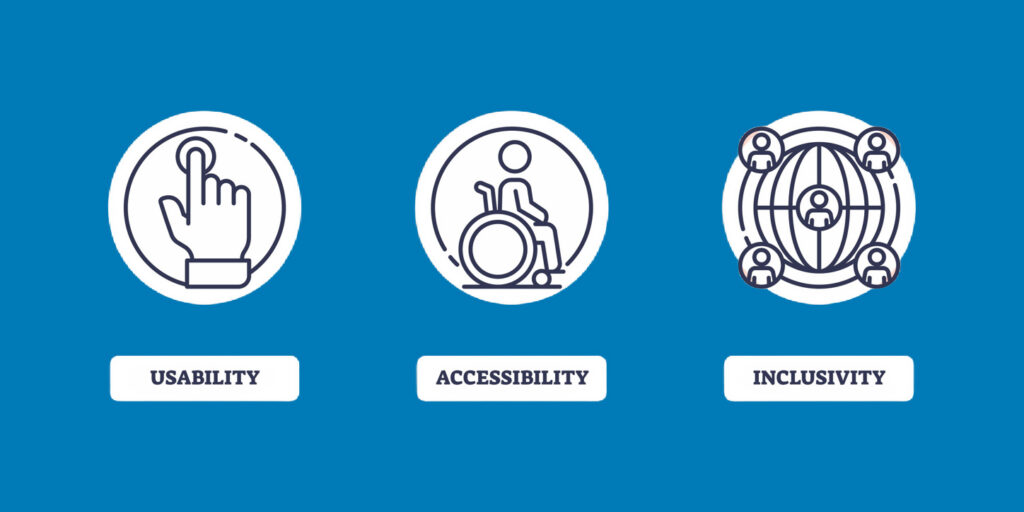
(Answer) Professional societies, publishers, and editors are so important, because we are the bridges that can get information to people. It’s our duty to ensure that the information gets to everyone, which means it needs to be as accessible as possible. We must keep in mind that accessibility isn’t merely a box to be checked off. It needs to genuinely enable a user experience that’s available to everyone.
From here, professional societies, publishers, and editors should maintain their avenues of communication to continue sharing ideas and methods for furthering diversity and inclusivity efforts. When ideas are shared, that opens the doors to far more possibilities and solutions.
(Answer) Many connections were made and experiences shared during the Summit. I hope everyone involved will reach out to attendees they connected with from time to time, compare notes and ask questions about what is working and what isn’t working. Over years to come, I hope our Summit community develops into a support group, so to speak, motivating each other and offering tips for collective advancement.
(Answer) Professional societies, publishers, and editors can sustain momentum by embedding inclusive practices, supporting collaboration, and modeling equitable decision-making. Individuals and organizations can build on the Summit by taking concrete actions within their workflows, mentoring underrepresented voices, fostering cross-team collaboration, and maintaining ongoing dialogue to ensure measurable, lasting change.
What do you hope the lasting legacy of the Summit will be, and if readers could take away just one idea or action, what would you want it to be?
(Answer) There are a lot of hard tasks to complete in a short period of time when it comes to improving accessibility in publishing. We could have walked away from this summit overwhelmed by what needs to be done and the hurdles we have to face to provide accessibility to all our potential audiences; but everyone walked away incredibly inspired and motivated, seeing opportunities to work together, share insights, and team it out. I see this as the greatest legacy of the summit now and in years to come: Keeping forward momentum going to provide the best products and tools we can for our authors, editors, and end users; creating myriad alternatives for accessing, creating, and sharing knowledge; constantly improving through partnerships and cooperation.
(Answer) I hope that there will be many more Summit events to come! What I think readers can take away from this is the knowledge that there is a burning desire in people to work toward inclusion and equity. People want to come together, and they want to enact change, and that alone is more than enough reason to start your own committees and summits, no matter how small. Even one step forward is a start that can soon be followed by many more!
(Answer) Tough question! There were so many good take-aways it’s hard to pick just one. I guess for me it is keeping an open mind – being open to different perspectives and different experiences. So many of the presentations gave me perspective on disabilities that I have overlooked. It’s always good to be reminded that not everyone has the same experiences — whether that is entry way carpets or being able to navigate websites and engage with online images.
(Answer) I hope this becomes an industry event that long continues to inspire meaningful discussion, actionable insights, and commitment to progress. As global forces evolve, I hope the Summit will evolve and thrive as well, bringing our industry ever closer to true inclusivity, equity, and accessibility. If you take away one idea or action from this article, I hope it is to join us for the next iteration of the Pathways to Inclusive Publishing Summit on January 27, 2028! Keep your eyes open for registration information in the fall of 2027. (https://ascelibrary.org/publishing-summit-2026)
(Answer) The lasting legacy I hope for is embedding inclusivity into everyday publishing practices. The key takeaway: advancing inclusive publishing is a shared responsibility, and every role can make a meaningful impact.
Is there anything you weren’t asked but would like to share?
(Answer) Personal stories shared by speakers offered intimate, human perspectives that transformed abstract standards into lived experiences, allowing attendees to truly understand the impact of inclusive practices. The summit fostered an extraordinary sense of community; the chat was alive with reflection, affirmation, and shared commitment, making it one of the most social, engaging, and connected summits I’ve ever attended.
(Answer) I’d like to add that while the Summit emphasized dialogue and actionable steps, its broader impact is really about nurturing a culture of inclusivity. Lasting change in publishing comes from ongoing collaboration, shared commitment, and attention across all roles. The Summit was an important starting point, and its value will continue to grow as those efforts are carried forward.